An Introduction to Monolithic Insulating Joint
In oil and gas transmission systems, urban water supply networks, and various industrial pipeline installations, corrosion of metal pipelines remains a persistent and serious challenge. Whether pipelines are buried underground, installed above ground, or laid on the seabed, long-term exposure to moisture, air, and stray electrical currents inevitably leads to rust formation and progressive corrosion.
To extend service life and ensure safe operation, engineers typically adopt cathodic protection systems combined with electrical isolation measures to slow down corrosion processes. Among these solutions, the monolithic insulating joint plays a crucial role as a key component for achieving electrical isolation.
The following sections explain what it is, how it works, where it is used, and how it compares with traditional flange insulation kits.
A monolithic insulating joint is a specialized pipeline connector designed to provide electrical discontinuity between two sections of a pipeline—essentially “cutting off” electrical conduction.
In simple terms, it is a fully integrated, non-detachable welded structure installed in pipelines. Inside the joint, multiple layers of insulating materials and sealing systems are incorporated to ensure both mechanical strength and electrical isolation performance.
In natural gas, oil, or water transmission pipelines, metallic pipes are continuously exposed to environmental influences such as moisture, air, lightning, or stray currents generated by nearby electrical systems. These currents can trigger electrochemical reactions on the pipe surface, gradually leading to corrosion.
The monolithic insulating joint prevents this by electrically separating pipeline sections, dividing a long pipeline into independent electrical segments and limiting the spread of corrosion current.
Triple-layer insulation protection
The insulating function is achieved through a “three-layer protection system”:
- Insulating gasket as the first layer, preventing direct metal-to-metal contact between both sides of the joint, fundamentally blocking current conduction.
- Dielectric filling material as the second layer: The internal cavity is filled with a specialized dielectric compound that enhances insulation resistance and prevents performance degradation under humid or high-voltage conditions.
- Anti-conductive coating is the third layer: The internal and external surfaces are coated with non-conductive epoxy coatings (or reinforced anti-corrosion coatings in harsh environments), forming a complete electrical and corrosion protection barrier.
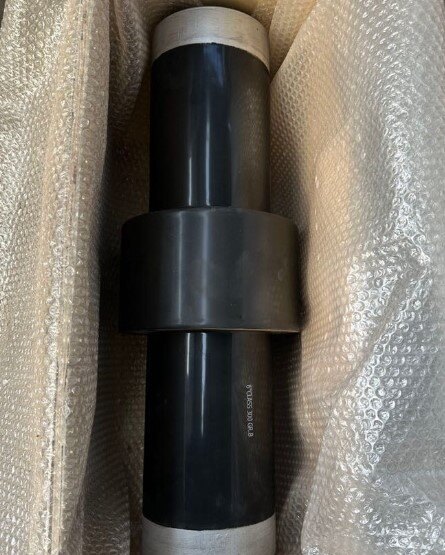
Monolithic insulating joints are widely used in pipeline systems where prevention of electrochemical corrosion is critical, such as:
- Buried oil and gas transmission pipelines
- Urban gas distribution networks
- Main water transmission pipelines
- Subsea pipelines
- Above-ground pipelines
- Typical installation locations
They are generally installed at:
- Junctions between main pipelines and branch pipelines
- Transition zones between above-ground and underground pipelines
- Segmentation points in pipelines equipped with cathodic protection systems
- Role in cathodic protection systems
Cathodic protection is an electrochemical corrosion prevention method widely used in pipelines, storage tanks, dock piles, ships, and offshore platforms. It works by applying an external current or using sacrificial anodes so that the protected structure becomes the cathode in the electrochemical circuit, thereby significantly slowing corrosion.
When used together with cathodic protection systems, monolithic insulating joints ensure more uniform current distribution and prevent protective current from flowing into unintended pipeline sections.
The electrical isolation performance of monolithic insulating joints depends on their precisely engineered internal structure. This includes the triple insulation system, selection of base materials, and sealing and anti-corrosion systems.
As mentioned earlier, insulation performance is ensured by three coordinated layers.
The insulating gasket is typically made of epoxy-based glass fiber reinforced laminated material, which provides both mechanical strength and electrical insulation. The internal dielectric filling improves insulation resistance and prevents performance degradation in humid or high-pressure environments.
The surface epoxy coating (or coal tar epoxy in highly corrosive environments) serves as the third protective barrier. Together, these layers ensure long-term and reliable operation.
The body material of the joint must match the pipeline material. Common materials include ASTM A694, ASME SA105, SA106 Gr.C, and other high-strength carbon steels. For high-pressure transmission pipelines, higher-grade line pipe steels such as X52, X60, X65, or ASTM A707 may also be used.
Material selection depends on:
- Transported medium
- Operating pressure
- Ambient temperature
- External corrosion conditions
After manufacturing, all joints are assembled in the factory and tested using hydrostatic pressure at 1.5 times the working pressure, along with electrical insulation tests to ensure compliance.
Standard sealing elements use Viton fluororubber O-rings, which offer excellent resistance to oil, high temperature, and chemical corrosion, making them suitable for most oil and gas applications. Other elastomer materials may be selected for special media or extreme temperature conditions.
For corrosion protection, in addition to standard epoxy coatings, thicker coatings or composite anti-corrosion systems may be applied in marine or highly corrosive environments.
Welded monolithic insulating joints are typically machined to match the internal diameter of the pipeline to minimize flow resistance. They may also be designed with single-ended or double-ended tapered bore transitions depending on requirements.
In pipeline electrical isolation systems, flange insulation kits represent a traditional solution, while monolithic insulating joints represent a more advanced engineering approach.
Conventional flange insulation kits consist of insulating gaskets, sleeves, and washers installed between two flanges to block stray currents. However, they have several disadvantages:
- Require on-site assembly
- Over-tightening bolts may damage insulation materials
- Uneven tightening may lead to leakage
- Soil settlement, thermal expansion, and vibration can loosen flanges
- Long-term deformation may cause insulation failure or short circuits
Once failure occurs, repair costs are often extremely high and may even require pipeline shutdown.
In contrast, monolithic insulating joints adopt a fully integrated, non-detachable welded structure. All critical components are encapsulated within a forged steel body, forming a high-strength and unified sealing insulation system.
Since there are no bolts, sleeves, or washers, the risk of electrical short circuits is fundamentally eliminated. Installation only requires two butt welds, making construction safer and significantly reducing human error.
From a performance perspective, these joints are factory-tested for hydrostatic pressure, electrical insulation, pressure fatigue, torsional loads, and bending strength. Their mechanical performance is comparable to the pipeline itself, making them suitable for high-pressure systems.
Historically, monolithic insulating joints had higher initial cost and longer lead times. However, manufacturing advancements have enabled stock availability and faster delivery.
Although the initial cost may still be higher than flange insulation kits, the overall life-cycle cost is often lower because:
- No regular maintenance or replacement is required
- No flange tightening inspections are needed
- Reduced shutdown risk and leakage probability
- Lower long-term labor and maintenance expenses
Therefore, when considering total ownership cost, monolithic insulating joints are more economical in the long run.
Understanding technical parameters is essential for proper selection and engineering application.
Monolithic insulating joints are typically available in sizes ranging from 50 NB to 1200 NB (2 inches to 48 inches), with pressure ratings from ANSI 150 to ANSI 900. Higher pressure classes can also be customized.
Structurally, they consist of two pipe sections, each with beveled ends for welding. One side may include a welded flange structure embedded in insulating materials, along with reinforcing rings for strength.
For pressures below 50 bar, a single-seal design is used; above 50 bar, a double-seal configuration is applied for enhanced safety.
To ensure smooth flow and pigging operations, internal diameter tolerances are tightly controlled:
DN500 and below: ±2%
Above DN500: ±1.5%
Wall thickness of both pipe ends matches the main pipeline. External electrical connection lugs are provided for cathodic protection systems, typically compatible with M10 bolted cable connections.
The design must ensure full pigging capability, and slip-on flange structures are not used.
Designs typically reference industry standards such as Shell DEP 31.40.21.31. Unless otherwise specified, standard conditions include:
Above-ground installation
- Maximum design temperature around 82°C
- Minimum design temperature around -5°C
Factory testing includes:
- Hydrostatic pressure test at 1.5× working pressure
- Electrical insulation resistance test
- Pressure fatigue testing
- Torsional load testing
- Bending strength testing
Proper installation and maintenance practices are essential for reliable long-term performance.
On-site installation requires only two butt welds, forming a permanent connection. No bolting, alignment, or complex assembly is needed.
The absence of mechanical joints improves long-term reliability. After welding, field-applied anti-corrosion coatings can be applied to ensure continuity of external protection systems.
For buried pipelines, the robust steel structure provides strong resistance against environmental corrosion and mechanical damage.
All assembly is completed in the factory under strict quality control. Pre-delivery testing includes:
- Structural integrity verification
- Sealing performance tests
- Electrical insulation tests
Factory production ensures consistent quality and minimizes the influence of on-site installation conditions. Customization is available for materials, coatings, sealing types, and dimensions based on project requirements.
Since all critical components are encapsulated within a forged steel housing, the joint requires virtually no maintenance throughout its service life.
This is particularly important for buried and subsea pipelines where maintenance access is difficult and costly. Compared to flange systems, monolithic insulating joints significantly reduce leakage risks and electrical short-circuit failures.
By dividing pipelines into electrically isolated sections, they help control current distribution and reduce electrochemical corrosion effectively.
Monolithic insulating joints are essential components in modern pipeline systems for achieving electrical isolation and corrosion protection. Through an integrated design combining insulating gaskets, dielectric fillers, and protective coatings within a forged steel body, they provide both high mechanical strength and reliable electrical isolation.
Compared with traditional flange insulation kits, monolithic insulating joints offer simpler installation, higher reliability, and virtually maintenance-free operation. Although initial investment may be slightly higher, their life-cycle cost is generally lower.
With size ranges from 2 inches to 48 inches and pressure ratings up to ANSI 900 and beyond, they are suitable for a wide range of pipeline systems including natural gas, oil, and water transmission networks.
By installing monolithic insulating joints at key pipeline locations, stray current and corrosion current paths can be effectively blocked, improving cathodic protection performance and significantly enhancing pipeline safety, stability, and service life. Whether for new pipeline construction or system upgrades, monolithic insulating joints are a highly recommended electrical isolation solution.
