How to Choose the Right Pipe End for Your System
In industrial construction and infrastructure projects, pipeline systems play a crucial role in transporting fluids, gases, and various other media. The safe and stable operation of pipelines depends not only on the quality of the pipe material itself but also on the type of pipe end. The design of pipe ends determines how the pipe connects to other fittings, valves, or equipment, directly influencing sealing performance, pressure resistance, and maintenance convenience. However, in practical engineering design and procurement, pipe end types are often overlooked, leading to improper selection, installation difficulties, or even safety hazards. This article provides a detailed explanation of four common steel pipe end types, plain end, threaded end, bevel end, and grooved end, analyzing their structural characteristics, connection methods, and applicable scenarios. The goal is to help engineers, technicians, and procurement teams make informed choices to ensure long-term safe and reliable pipeline operation.
In pipeline system design, beyond factors such as pipe diameter, wall thickness, material, and accessories like flanges and elbows, the pipe end configuration is a key element directly affecting system performance. The choice of pipe end determines how a pipe connects with other components and what application scenarios it can support. Improper selection may result in poor connections, difficult installation, shortened service life, or even leakage and safety incidents under high-pressure conditions.
Pipe ends in engineering applications are generally categorized into four main types:
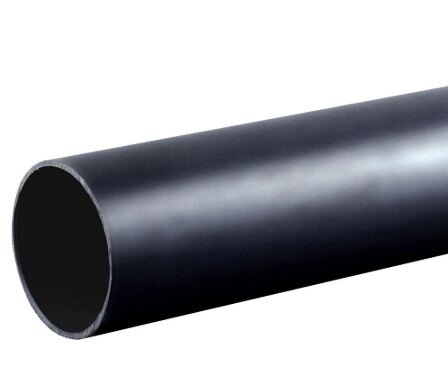
- Plain End (PE) – The pipe end is cut flat at a 90-degree angle.
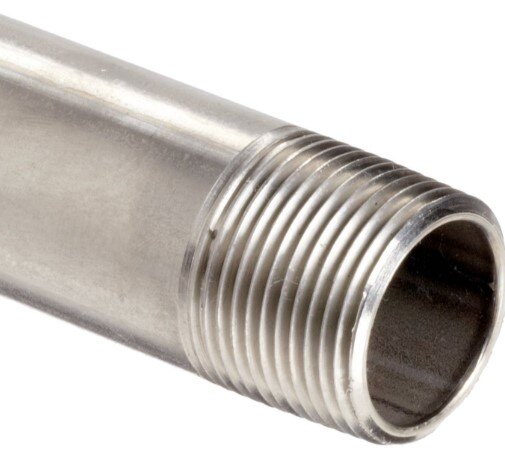
- Threaded End (TE) – The pipe is machined with internal or external threads for mechanical connection.
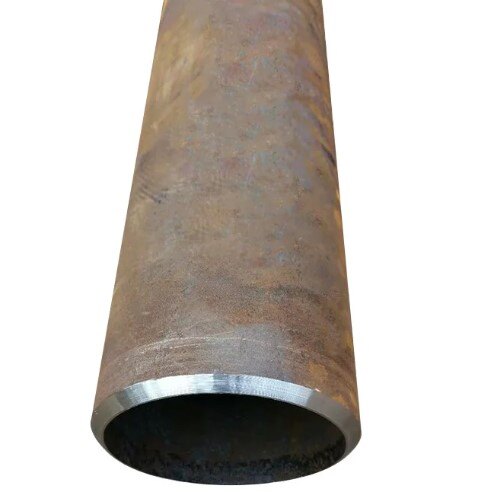
- Bevel End (BW/BE) – The pipe end is machined into a specific angled bevel.
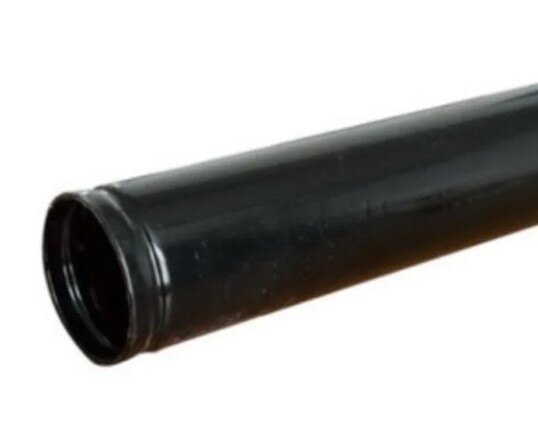
- Grooved End – The pipe end has a circumferential groove for mechanical coupling using a clamp.
In procurement and design documents, pipe end types are clearly indicated in specifications. For example, a pipe labeled “TOE” means one end is threaded (Threaded One End) while the other is plain. A “TBE” label indicates threading on both ends (Threaded Both Ends). Such markings are crucial for procurement staff and on-site personnel to ensure purchased pipes match project requirements, avoiding delays or rework due to incorrect pipe ends.
Plain end pipes are the simplest and most basic type of pipe end. Understanding their structure, connection methods, and typical applications provides a comprehensive view of this pipe type.
Plain end pipes are produced by cutting the pipe perpendicularly along its length to form a flat 90-degree end face. This straightforward process requires no additional threading or bevel machining. Plain ends can be used directly or further processed into threaded or bevel ends. With minimal manufacturing steps, plain end pipes reduce special machining costs, making them economically advantageous for projects with limited budgets.
Plain end pipes are primarily used with two types of connections:
Socket Welding (SW): Suitable for small-diameter steel pipes up to 2 inches nominal diameter. The plain end pipe is inserted into the socket of a fitting or flange and welded around the outside. A small gap of approximately 1/8 inch is maintained to accommodate thermal expansion, ensuring weld accuracy and safety.
Slip-on Flange: The pipe end passes through the flange hole and is fixed by bolting and gasket sealing. Slip-on flanges are easier to align and simplify installation.
Plain end pipes are suitable for low-stress, low-pressure environments such as water supply lines, air-conditioning condensate piping, low-viscosity chemical transport, and compressed air pipelines. Working pressures typically do not exceed 150 PSI, and the media pose minimal hazards. They are unsuitable for high-pressure, high-temperature, or hazardous media applications, as the strength and sealing performance of socket weld or slip-on flange connections are limited.
Threaded end pipes achieve mechanical connection through threading. Understanding their structural standards, installation requirements, and limitations is essential for proper selection.
Threaded end pipes have internal or external threads machined on the pipe wall, allowing connection with compatible threaded fittings or valves. Most industrial pipes use the National Pipe Thread (NPT) standard, which is tapered with a 3/4 inch diameter change per foot. The tapered thread gradually tightens during assembly, forming a relatively tight joint. Thread parameters include pitch, angle, depth, root, crest, and nominal diameter, all of which must adhere strictly to standards for proper assembly.
Threads may be right-hand or left-hand, with right-hand threads being more common. When selecting and ordering, specifying the thread standard, length, and type ensures compatibility with fittings.
Before installation, threaded ends require preparation. Direct tightening may damage threads or compromise the seal. Common practice includes applying sealing material such as nickel-impregnated stainless steel tape on the threads, providing lubrication and maintaining a gap for easier assembly and disassembly. Tightening torque must be controlled to avoid damage to the pipe, fittings, or thread corrosion resistance.
Threaded end pipes are typically used in small-diameter pipelines (≤2 inches) with pressures up to 300 PSI. Advantages include fast installation, simple operation, and no need for welding. Applications include fire sprinkler systems, residential plumbing, and small compressed air pipelines. In fire-risk areas where hot work is prohibited, threaded connections are a safer alternative.
However, due to limited strength and sealing under stress or vibration, threaded end pipes are unsuitable for hazardous, flammable, or high-pressure media, and are not recommended for high-temperature or critical industrial pipelines.
Bevel end pipes are designed for butt-weld connections and dominate high-pressure pipeline applications.
Bevel end pipes, also known as weld end pipes, have angled ends rather than vertical cuts. Standard bevel angles are typically 37.5 degrees but may vary from 30–35 degrees. Bevels can be produced manually or with automated equipment to ensure dimensional consistency, allowing perfect alignment with butt-weld fittings or weld-neck flanges.
Bevel ends are connected via butt welding. Two pipes with bevel ends form a V-shaped groove into which filler metal is applied. This design allows full penetration welding, ensuring the weld metal fully fuses through the pipe wall, producing a joint as strong as the pipe itself. Poor bevel machining can result in incomplete penetration, creating potential crack sites and serious safety hazards. Bevel end pipes usually comply with ASME B16.25 standards, and high-quality applications may also meet API 5L requirements.
Bevel end pipes are suitable for high-pressure, high-temperature, and continuously operating industrial systems, including onshore and offshore oil & gas pipelines, high-pressure water lines, chemical process pipelines, power plant steam lines, and critical structural pipelines. Working pressures often exceed 150 PSI, with some systems reaching over 10,000 PSI. Butt welding ensures maximum structural integrity and seal reliability, making bevel ends the standard for critical pipelines.
Grooved end pipes use mechanical clamp connections, offering advantages in rapid installation and frequent maintenance.
Grooved end pipes have a circumferential groove on the pipe exterior. During assembly, a rubber gasket is placed in the groove, and two pipe ends are coupled using a metal clamp. The clamp compresses the gasket, filling the gap and forming a seal. This purely mechanical connection requires no welding or complex threading.
Grooved connections are extremely easy to install and remove. Unlike welding, no hot work is required, allowing rapid assembly and shorter construction times. Compared to threading, grooved connections do not require precise machining, and components can be disassembled for maintenance or replacement without damage. This makes grooved end pipes ideal for systems requiring frequent maintenance, such as building fire protection, HVAC, and some industrial circulating water lines.
After understanding the four pipe end types, a systematic comparison helps guide appropriate selection based on project requirements.
Plain End: Low-pressure systems (≤150 PSI).
Threaded End: Low- to medium-pressure systems (≤300 PSI).
Bevel End: High-pressure systems (≥150 PSI, up to thousands of PSI).
Grooved End: Flexible, generally medium- to low-pressure depending on clamp and gasket specifications.
Plain End: Simple prep, but SW or slip-on flange installation requires welding or bolting.
Threaded End: Requires threading and sealant, fast operation, no welding needed.
Bevel End: Requires precise bevel machining and skilled welders, highest technical demand.
Grooved End: Quick and easy, mechanical fastening, minimal skill required.
Low-pressure water, HVAC, light industrial pipelines: Plain end with SW or slip-on flange is cost-effective.
Fire sprinklers, residential plumbing, small compressed air systems: Threaded end is suitable for quick assembly.
High-pressure, high-temperature, hazardous media: Bevel end with butt welding ensures safety and reliability.
Frequent maintenance or modular systems, hot-work restricted areas: Grooved end offers convenient mechanical connections.
Pipe end type is a fundamental element in pipeline system design. Plain end pipes are simple and economical for low-pressure, small-diameter systems. Threaded ends provide convenient installation for non-welded, low- to medium-pressure pipelines. Bevel ends enable high-strength butt-weld connections for critical high-pressure, high-temperature industrial systems. Grooved ends excel in rapid mechanical assembly and frequent maintenance scenarios.
For engineers, site managers, welding technicians, and procurement teams, accurately understanding pipe end structures, connection methods, and applicable ranges is essential to avoid construction delays, ensure structural integrity, and control costs. Choosing the appropriate pipe end improves installation efficiency and guarantees long-term safe operation. During design and procurement, pipe end selection should align with system conditions, technical standards, and project requirements, laying a solid foundation for efficient pipeline operation.
