Forged Steel Ball Valves for High-Pressure Applications
In industrial piping systems, the selection of valves directly affects the safety and operational efficiency of the entire system. Forged steel industrial ball valves have become a standard configuration in many key industries such as oil and gas, chemical processing, and power generation due to their excellent strength, durability, and sealing performance. Compared with ordinary cast valves, forged steel ball valves are manufactured through a special forging process that produces a denser internal structure, enabling them to withstand higher pressures and more demanding media conditions.
This article provides a systematic overview of forging processes, material characteristics, valve types, application fields, and maintenance practices, helping engineers and procurement personnel fully understand the performance features and selection considerations of forged steel ball valves, thereby offering practical guidance for real-world applications.
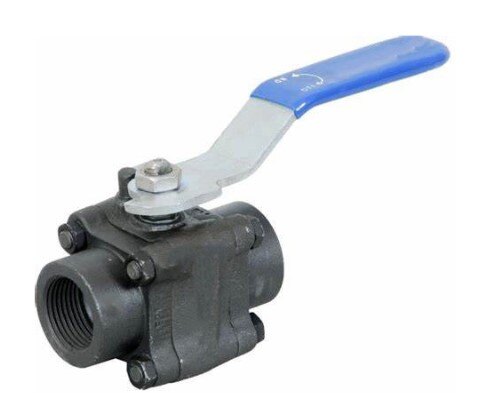
A forged steel ball valve is an industrial ball valve whose body is manufactured using forging technology. Its key characteristic lies in shaping metal through forging processes, which produces a denser valve body structure and significantly improves mechanical strength and service life.
Compared with cast ball valves, forged steel ball valves offer superior material density and overall performance, allowing stable sealing and flow control under high pressure, high temperature, and corrosive media environments.
Forged steel ball valves are available in various pressure ratings and material configurations to suit different media and operating conditions. Common configurations include carbon steel forged ball valves and flanged forged steel ball valves. These valves are widely recognized for high strength and reliability, especially in high-pressure and extreme temperature industrial applications.
To understand why forged steel ball valves outperform cast valves in mechanical performance, it is essential to examine the forging process itself. Forging is not only a shaping method but also a critical factor determining the internal structure and mechanical properties of the material.
Forging is a metalworking process that changes the shape of metal through heating and external force. During forging, steel is heated to a temperature suitable for plastic deformation and then shaped by hammering, pressing, or rolling.
Since the metal remains in a solid state during deformation, internal defects are compressed, and grain structures are refined and aligned along the direction of deformation. This results in a more compact and uniform internal structure, significantly improving compressive strength, fracture resistance, and fatigue resistance.
Common forging methods include open-die forging, closed-die forging, and seamless ring rolling.
Open-die forging involves shaping metal between flat dies through repeated hammering. It is suitable for large components such as valve bodies. Although equipment requirements are relatively simple, dimensional accuracy is lower, requiring additional machining afterward.
Closed-die forging uses a die cavity to achieve precise shaping. Metal flows and fills the enclosed mold cavity, making it suitable for small, complex components. This method offers high precision and material utilization, making it ideal for mass production.
Seamless ring rolling forging is specifically used for producing high-strength ring-shaped components. It provides excellent pressure resistance and a dense microstructure, commonly used for high-pressure valve rings and connection components.
Forging and casting are fundamentally different metal processing methods.
Casting involves melting metal and pouring it into a mold to solidify into shape. While suitable for complex geometries, casting often results in internal porosity or shrinkage defects, reducing structural density.
Forging, on the other hand, does not melt the metal. Instead, it applies pressure to heated steel to form the required shape. During this process, internal pores are compressed and grain structures are refined, resulting in a more uniform and stronger material.
Therefore, forged steel exhibits higher density and strength, making it more suitable for critical components that must withstand high pressure and heavy loads, such as ball valve bodies.
The forging process determines the internal structure of the material, which directly affects the performance of the valve. Forged steel is well-suited for high-pressure, high-temperature, and corrosive environments due to its unique strength, durability, and resistance to environmental damage.
The primary advantage of forged steel is its high strength. The forging process refines grain structures and ensures uniform distribution, significantly improving compressive and fracture resistance. This allows forged steel ball valves to operate reliably in high-pressure systems without deformation or rupture.
Another key advantage is durability. Due to the compact internal structure, forged components resist wear during long-term operation and can withstand frequent opening and closing cycles as well as continuous media erosion. This reduces maintenance costs and extends service life, improving overall economic efficiency.
Forged steel materials also demonstrate good corrosion resistance and can withstand exposure to water and various chemical media. By selecting appropriate alloy compositions, forged steel ball valves can be adapted to different corrosive environments. For example, in pipelines containing acidic or alkaline media, suitable material selection helps prevent corrosion damage.
In addition, forged steel maintains stable performance under high temperatures. Its high-temperature strength and creep resistance are superior to ordinary carbon steel, making it widely used in petroleum, chemical, and power generation industries, such as steam pipelines and thermal processing systems.
Based on whether the ball is supported structurally, forged steel ball valves are mainly divided into floating ball valves and fixed ball valves. They differ significantly in sealing principles, pressure suitability, and maintenance requirements.
The forged steel floating ball valve is a common type in which the ball is not fixed by upper or lower supports. When the valve is closed, the ball is pushed by media pressure toward the downstream seat, creating a tight seal.
This design is simple, compact, lightweight, and easy to operate. It is suitable for medium-pressure conditions and is widely used in oil, gas, and water systems.
However, its sealing performance depends on media pressure. In high-pressure applications, excessive force may increase operating torque and cause accelerated wear on sealing surfaces, limiting its use in ultra-high-pressure systems.
The forged steel fixed ball valve, also known as a trunnion-mounted ball valve, is designed for high-pressure applications. The ball is supported by upper and lower trunnions, preventing movement under pressure.
This design improves stability and sealing reliability while reducing operating torque. Fixed ball valves are widely used in oil fields, refining units, and chemical plants where high pressure and high risk conditions exist.
Depending on the support structure, fixed ball valves can be designed as top-entry or side-entry types, allowing easier online maintenance and repair.
While valve structure determines mechanical adaptability, material selection directly affects service life and safety in specific media environments. Forged steel ball valves can be made from various steels, ranging from general stainless steels to high-performance alloy steels.
Common stainless steel grades include SS 304, 304L, and 316L.
SS 304 offers good corrosion resistance and general applicability. It is widely used in standard industrial environments and water systems.
SS 304L is a low-carbon version of 304, reducing the risk of intergranular corrosion after welding, making it suitable for welded installations requiring higher corrosion resistance.
SS 316L contains molybdenum, providing superior resistance to chloride corrosion. It is ideal for marine environments, high-salinity water, and chemical media containing chlorides.
In addition to stainless steel, forged steel ball valves can be made from various alloy steels such as A105N, LF2, F11, F22, F91, F304, F316L, F321, F347H, F51, F53, and F55.
A105N is a commonly used carbon steel forging material suitable for ambient and medium/low-temperature conditions. LF2 is used for low-temperature applications with good toughness. F11 and F22 are chromium-molybdenum steels suitable for high-temperature environments. F91 is a higher-grade alloy used in power plant steam systems.
Duplex stainless steels such as F51, F53, and F55 combine high strength with excellent stress corrosion resistance, making them suitable for harsh marine and chemical environments.
Due to their structural, material, and process advantages, forged steel ball valves are widely used across multiple industries.
In the oil and gas sector, forged steel ball valves are essential components. They are used in pipelines, wellhead equipment, and processing facilities to control the flow of crude oil, natural gas, and intermediate media.
In upstream operations, they are used for wellhead control and gathering systems. In midstream transport, they handle long-distance pipeline shutoff and flow regulation. In downstream refining, they control refined products and chemical feedstocks.
Their high strength and corrosion resistance ensure safe transport while reducing leakage risks and improving operational safety.
In chemical plants, forged steel ball valves handle corrosive, high-temperature, and high-pressure media. They are used in production units, storage areas, and pipelines, ensuring safe and precise control of hazardous fluids such as acids and solvents.
In the power industry, they are widely used in steam, water, and oil systems. In thermal power plants, they are applied in boiler feedwater systems, main steam pipelines, and fuel lines, ensuring stable operation of turbines and boilers under extreme conditions.
In water treatment systems, forged steel ball valves control water, wastewater, and treatment chemicals, ensuring stable system operation and process efficiency.
In HVAC systems, they regulate refrigerants and cooling media, ensuring stable indoor environmental control and reliable system operation.
They are also widely used in marine engineering, mining, and slurry transport systems due to their corrosion resistance and durability.
The reason forged steel ball valves are regarded as a reliable choice for high-pressure applications lies in their comprehensive advantages across multiple key performance indicators. These advantages cannot be attributed to a single process or material alone, but rather represent a systematic combination of pressure resistance, environmental adaptability, and operational responsiveness.
The following analysis is carried out from two perspectives: stability under high-pressure and extreme operating conditions, and fast shutoff capability combined with low leakage risk.
Forged steel ball valves maintain stable operation under high pressure conditions such as hydraulic systems and gas pipelines. Their high structural strength allows them to withstand extreme internal pressure without leakage or failure.
They also perform well at high temperatures, maintaining sealing integrity in steam and thermal systems. With appropriate material selection, they can resist corrosion and significantly extend service life.
Forged steel ball valves offer fast shutoff capability due to their quarter-turn operation. In emergency situations, a 90-degree rotation can quickly stop media flow, reducing potential damage.
Their robust sealing design and high-quality forged structure ensure low leakage rates, meeting increasingly strict environmental and safety standards in modern industries.
Forged steel ball valves demonstrate exceptional versatility across a wide range of industrial applications. These durable valves have become an essential component in many industries, playing a key role in ensuring system safety, efficiency, and operational stability. Whether in demanding oil and gas environments or precision-oriented HVAC systems, forged steel ball valves consistently deliver reliable performance, making them a trusted choice in modern industrial fluid control systems.
