How to Choose Chequered Steel Plates for Your Projects
In both construction and industrial production, the safety of floors, staircases, and platforms directly affects the well-being of personnel and the efficiency of operations. Every year, a significant number of workplace accidents are caused by slippery surfaces, leading to injuries and financial losses. In addition, inappropriate material selection often results in high maintenance costs and reduced service life, which can be difficult to estimate. Therefore, finding a balance between safety, durability, and cost-effectiveness is a crucial challenge for every project.
Chequered plates, also known as tread plates or diamond plates, were specifically developed to address this issue. They are metal sheets with raised surface patterns that provide multiple benefits simultaneously: enhanced safety through anti-slip properties, increased structural strength, and improved visual appeal. These plates are widely used in industrial floors, commercial showrooms, truck beds, ship decks, and many other settings. Despite their widespread use, the wide variety of chequered plate products on the market often causes confusion among procurement managers and project engineers. Questions commonly arise: What are the differences between various materials? How can the appropriate specification be selected for a specific application? What factors influence the long-term performance and durability of chequered plates?
This guide aims to answer these questions systematically. It introduces the definition of chequered plates, their types, material grades, key advantages, and typical application scenarios, while also providing practical guidance for selection. Whether your work is in construction, industrial manufacturing, logistics, or marine applications, this guide will help you understand the essential knowledge needed to make informed material choices for your projects.
A chequered plate is a type of metal sheet with a raised pattern on one surface. In English, it is commonly referred to as a chequered plate, although it is also known as a diamond plate or tread plate. The raised pattern can take many forms, from diamonds to circles, teardrops, or leaf shapes. These protrusions are not merely decorative; they increase friction between shoes, tires, or other contact surfaces and the plate, effectively providing an anti-slip function. At the same time, the raised design contributes to the plate’s structural strength, allowing it to carry heavier loads than a flat sheet of the same thickness.
In construction, safety and material performance are closely linked. Chequered plates strike a balance between these two requirements. They provide excellent grip to reduce slip risks, sufficient rigidity to bear heavy loads, and a visually appealing surface that can complement industrial or modern architectural aesthetics. As a result, they are widely applied across various scenarios, including industrial flooring, vehicle decks, stair steps, and loading docks.
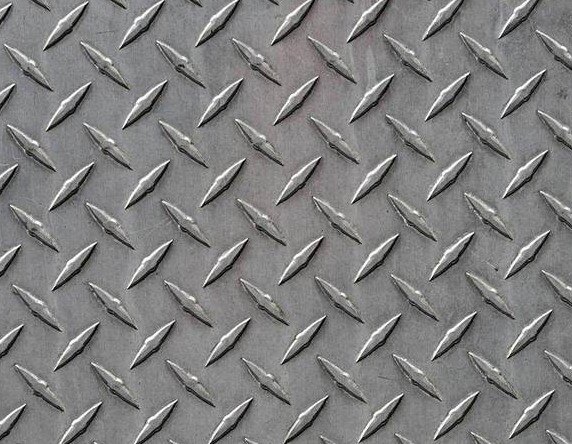
Chequered plates are available with various raised surface patterns, each designed for specific applications:
- Diamond Pattern: The diamond pattern is the most common and widely recognized. Its surface consists of regular diamond-shaped protrusions that provide excellent anti-slip properties. This pattern is frequently used for industrial flooring, stair treads, and walkways where high traction is required.
- Tear-Drop Pattern: Tear-drop shaped protrusions offer directional grip, improving safety in situations where movement tends to follow a particular direction. This pattern is useful on ramps and sloped surfaces.
- Circular Stud Pattern: Circular raised studs are distributed uniformly across the surface, providing consistent friction across all directions. This pattern is often used in areas where even grip is more important than directional traction, such as work platforms or commercial kitchens.
- Leaf Pattern: Slender, elongated leaf-shaped patterns provide an aesthetically distinct look while maintaining anti-slip functionality. They are commonly chosen for decorative purposes, such as in showrooms or architectural staircases, where visual appeal is important.
The material choice for a chequered plate depends on its intended application. The most widely used materials include:
- Low-Carbon Steel (MS Steel): Affordable, strong, and durable, low-carbon steel is the most common choice for industrial applications. It can support heavy loads and withstand frequent traffic while remaining cost-effective.
- Aluminum: Lightweight and resistant to corrosion, aluminum chequered plates are ideal for applications sensitive to weight, such as vehicle floors or portable platforms. Aluminum also resists rust, making it suitable for humid or outdoor environments.
- Stainless Steel: Stainless steel plates offer superior corrosion resistance and hygiene. These plates are widely used in the food, chemical, and pharmaceutical industries, where cleanliness is critical and frequent cleaning or disinfecting is required.
Chequered plates can be classified based on manufacturing processes or materials and surface treatments. Both classification methods impact the performance, durability, and suitable application scenarios of the plate.
- Hot-Rolled Plates: ot-rolled plates are produced by heating steel to high temperatures and passing it through patterned rollers that form the raised surface design. These plates have a relatively rough surface but provide higher strength, making them suitable for heavy-duty industrial applications.
- Cold-Rolled Plates: Cold-rolled plates are produced at room temperature, resulting in a smooth, refined surface and higher dimensional accuracy. Cold-rolled plates have better visual appeal and are suitable for applications where both aesthetics and moderate strength are required.
- Steel Chequered Plates: Produced via hot rolling, these plates are durable and suitable for heavy loads. They are commonly used in industrial flooring, stair treads, and platforms.
- Galvanized Chequered Plates: Coated with zinc to prevent rust, these plates are ideal for outdoor or high-moisture environments. Galvanization extends service life and reduces maintenance requirements.
- Diamond Pattern Plates: Featuring the widely recognized diamond-shaped pattern, these plates can be made of steel or aluminum and are available in a range of dimensions to meet diverse requirements.
- Stainless Steel Plates: Known for corrosion resistance and hygienic properties, stainless steel chequered plates are commonly applied in food processing, pharmaceutical, and chemical industries.
Chequered plates stand out due to five key advantages, which explain why they are preferred over flat plates, concrete, wood, or other metals in many applications:
- Anti-Slip Safety: Raised patterns significantly enhance friction, providing secure footing even under wet, oily, or contaminated conditions. Chequered plates are ideal for staircases, ramps, industrial floors, vehicle steps, and loading docks. They effectively reduce slips, trips, and equipment sliding compared to smooth steel plates.
- High Strength and Durability: The raised patterns not only prevent slipping but also distribute weight over a larger area, enhancing structural rigidity. Low-carbon steel, aluminum, and stainless steel plates can withstand heavy loads, frequent traffic, and impacts, maintaining structural integrity over long-term use.
- Corrosion Resistance: For outdoor or harsh environments, corrosion resistance is critical. Galvanized plates provide rust protection, while stainless steel resists chemical corrosion and exposure to moisture or salt spray. This reduces maintenance frequency and replacement costs, lowering long-term project expenditure.
- Aesthetic Appeal: The raised surface reflects light, creating a visually interesting texture. Chequered plates serve both functional and decorative purposes, enhancing the industrial or modern aesthetic of warehouses, showrooms, and commercial spaces.
- Ease of Processing and Cleaning: Plates can be cut, welded, and shaped according to project requirements. Stainless steel plates, in particular, are non-porous and easy to clean, making them ideal for kitchens, laboratories, and food processing facilities where hygiene is critical.
Material grades and dimensions play a crucial role in selecting the appropriate chequered plate. Grades determine the load capacity and environmental suitability, while dimensions affect installation feasibility and overall project cost.
- A36: Standard carbon structural steel with good strength and weldability, suitable for general construction and industrial use.
- IS 3502: Indian standard specifying chequered plate dimensions, patterns, and mechanical properties.
- S355M: Low-alloy high-strength steel with higher yield strength and toughness, ideal for heavy-load structural applications.
- Thickness: Typically ranges from 5mm to 12mm.
- Width: Generally 1250mm to 1500mm.
- Length: Typically 5000mm to 6300mm.
Selection should be based on load requirements, installation conditions, and cost considerations. Thicker plates can bear heavier loads but are heavier and more expensive.
Chequered plates are versatile and widely adopted across multiple industries:
- Industrial and Warehousing: Used for factory and warehouse flooring to support forklifts, shelving, and pedestrian traffic. Staircases and ramps use chequered plates to enhance worker safety, particularly in wet or humid environments. Loading platforms benefit from both strength and anti-slip properties, protecting personnel and equipment.
- Transportation: Widely used in truck beds, trailers, and cargo floors. Anti-slip surfaces facilitate safe movement of personnel and secure transport of goods. Vehicle steps and ramps also benefit from chequered plates. Parking lots increasingly use chequered plates for improved tire grip, noise reduction, and easier installation compared to concrete.
- Construction and Decoration: Applied in temporary access platforms, construction walkways, stair steps, and corridors to ensure worker safety. In commercial buildings, chequered plates also serve decorative purposes, complementing industrial-style interiors. Steel corner guards protect walls from collisions and are more durable than wood; galvanized variants provide rust resistance.
- Food and Pharmaceutical Industries: Stainless steel plates are widely used where hygiene is critical. Non-porous surfaces resist bacteria and facilitate cleaning, while anti-slip features ensure personnel safety in kitchens, laboratories, and processing facilities.
- Marine and Port Environments: Anti-slip and corrosion-resistant plates are critical on ship decks, gangways, and docks. Stainless steel and aluminum maintain performance under prolonged exposure to seawater, humid air, and harsh outdoor conditions.
Selecting the appropriate plate for a project involves evaluating load requirements, environmental conditions, cost, and supplier reliability. A systematic approach helps ensure both safety and cost-effectiveness:
- Assess Load Requirements: Determine plate thickness based on the expected load. Heavy machinery or frequent vehicle traffic requires thicker plates; lighter pedestrian use allows thinner options.
- Consider Environmental Conditions: Outdoor, humid, or chemically corrosive environments require galvanized or stainless steel plates. Indoor dry environments can use standard steel plates.
- Control Costs: Evaluate durability and suitability alongside price. Low-quality plates may save money initially but increase long-term maintenance or replacement costs. Choose the product with the best value within budget, rather than the lowest price.
- Choose Reliable Suppliers: Ensure products meet standards and specifications. Trusted suppliers provide accurate grades, dimensions, and quality assurance, supporting project safety and performance.
Chequered plates are multifunctional materials combining safety, durability, and aesthetic appeal. From industrial flooring to commercial decor, transport vehicles to marine applications, they play a crucial role across multiple industries. Understanding their types, materials, specifications, and applications is key to making informed decisions. By evaluating load, environment, cost, and suppliers, projects can select the most suitable chequered plates, ensuring long-term safety, functionality, and reliability. With proper selection, chequered plates not only reduce the risk of accidents and enhance operational efficiency but also provide a visually appealing, durable, and versatile material solution for modern construction and industrial applications.
