Comparison Between Blind Flanges and Slip-On Flanges
In industrial piping systems, flanges are indispensable components. Whether in petrochemical plants, power stations, or water treatment facilities, flanges play a critical role in connecting pipes, valves, pumps, and other equipment. Their primary purpose is straightforward: to ensure smooth flow of fluids or gases through the system while preventing leaks, without the need for additional mechanical support.
Among the many types of flanges, blind flanges and slip-on flanges are two of the most commonly used. Many engineers and procurement professionals often face the question: which type should be selected? What are their respective features, and which scenarios are they best suited for? This article provides an in-depth comparison of blind flanges and slip-on flanges across structure, function, installation, cost, and other critical dimensions, helping you make an informed decision.
As the name suggests, a blind flange is “blind” — it has no central hole and is a solid disc. This design defines its core function: to seal the end of a pipe or system opening, preventing the passage of fluids or gases.
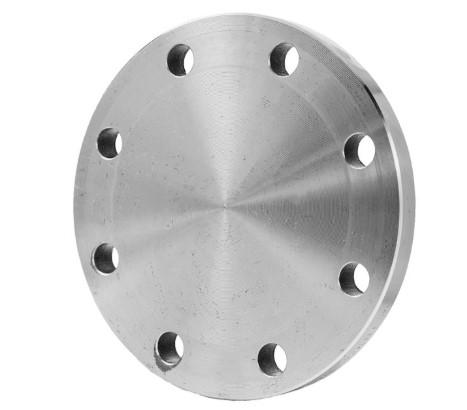
The most prominent feature of a blind flange is its solid structure. Unlike other flanges, it has no openings, fully blocking the pipe cross-section. This solid design gives blind flanges substantial weight and thickness, particularly for large diameters, which often require additional support structures to secure them.
The flange face typically features a raised face (RF) or flat face (FF) design. In high-pressure applications, a ring-type joint (RTJ) face can be used to enhance sealing performance. Materials commonly used for blind flanges include carbon steel, stainless steel, and various alloy steels, making them suitable for a wide range of corrosion environments and temperature conditions.
The primary functions of blind flanges can be summarized as follows:
- Terminating Pipe Flow: When a piping system needs to end at a certain point or a branch needs to be fully sealed, a blind flange is the most direct and effective solution. It provides a reliable sealing endpoint, ensuring no medium leaks.
- System Isolation and Maintenance: During pipeline maintenance, equipment servicing, or system modifications, a blind flange can be quickly installed at a flange connection to completely isolate the section under repair. This physical separation is more reliable than a valve, which might have internal leakage.
- Pressure Testing and Future Expansion: For newly constructed pipelines requiring pressure testing, a blind flange can seal the end to build up test pressure. It also reserves a connection point for future system expansion; when expansion is needed, the blind flange can simply be removed to connect new piping.
Blind flanges are manufactured and used according to strict industry standards, including:
- ASME B16.5: Covers nominal pipe sizes (NPS) ½ to 24 inches.
- ASME B16.47: For large-diameter pipelines, NPS 26 to 60 inches.
- AWWA C207/C228: Specifically for water utility systems.
Pressure ratings cover a broad spectrum, from ASME B16.5 Class 150 to 2500 and ASME B16.47 Class 75 to 900, meeting nearly all industrial pressure requirements.
Slip-on flanges, as the name implies, “slip” over the pipe. They are designed to provide an easy-to-install and cost-effective piping connection solution.
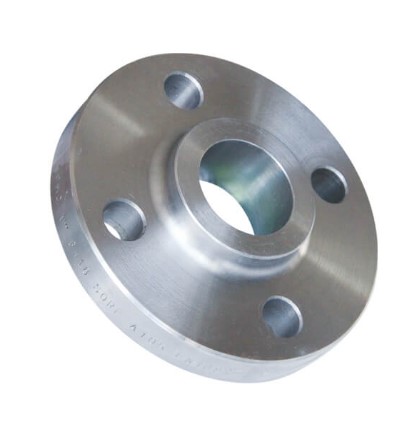
A slip-on flange has a central bore slightly larger than the pipe's outer diameter, allowing the pipe to be easily inserted into the flange. Once in place, the flange is permanently secured to the pipe using internal and external fillet welds.
The flange face can be raised (RF) or flat (FF), and material options are similar to those for blind flanges: carbon steel, stainless steel, and alloy steel. Applicable standards include ASME B16.5 (NPS ½–24), ASME B16.47 (NPS 26–60), and AWWA standards for waterworks. Pressure ratings range from Class 150 to 2500.
Slip-on flanges serve a very different purpose from blind flanges:
- Connecting Pipes and Equipment: This is the most basic and important function. Slip-on flanges connect two pipes together or link pipes to valves, pumps, or other equipment, forming a complete fluid transport system.
- Providing Cost-Effective Connection Points: Compared to weld-neck flanges, slip-on flanges require less pipe preparation. They do not need complex beveling and can be installed quickly and easily, reducing overall project costs.
- Facilitating Maintenance and Disassembly: While the slip-on flange is welded to the pipe, it connects to mating flanges with bolts. When maintenance or replacement is required for downstream equipment, the connection can be separated by simply loosening the bolts without cutting the pipe.
Slip-on flanges are well-suited for:
- Water utilities: potable water, wastewater treatment, and low-pressure water systems.
- Cooling water pipelines in power plants and chemical plants.
- Low- to medium-pressure process pipelines.
- Systems requiring frequent maintenance, as bolt connections are easy to disassemble.
Understanding the fundamental differences between these two flange types is critical for practical applications. These differences directly impact your choice.
This is the most essential distinction:
Blind Flanges: Serve to “stop” the flow — sealing pipe ends and preventing fluid movement.
Slip-On Flanges: Serve to “connect” — linking pipes or equipment and maintaining medium flow.
In system design, these flanges often complement each other. Slip-on flanges construct the primary pipeline network, while blind flanges seal unused interfaces, isolate maintenance sections, or terminate pipeline lines.
Blind Flange Installation: Very simple. No welding is required; it is bolted to the mating flange. Installation involves aligning bolt holes, placing a gasket, inserting bolts, and tightening in a cross pattern. Easy to remove: simply loosen the bolts. This simplicity makes blind flanges ideal for locations requiring frequent assembly and disassembly.
Slip-On Flange Installation: More complex. The pipe must be inserted into the flange bore and properly aligned. A tack weld is performed for positioning, followed by complete internal and external fillet welds. Welding quality directly affects flange strength and sealing performance, requiring professional welding and inspection. Once installed, the flange becomes a permanent part of the pipeline and cannot be removed independently.
Blind Flanges: Solid structure provides high strength, capable of withstanding high pressure and extreme stress. Performance depends on material and wall thickness, suitable from low to ultra-high pressure. Ideal for high-temperature and high-pressure environments with excellent sealing reliability.
Slip-On Flanges: Pressure capacity is mainly determined by weld quality, which can be a weak point under fluctuating or cyclic loads. Therefore, they are less suitable for critical or highly cyclic applications. They are best used in systems with stable pressure.
Blind Flanges: Robust structure allows high-temperature operation, suitable for steam, hot oil, and other high-temperature media.
Slip-On Flanges: Performance at high temperatures is affected by welds; thermal stress may cause cracking, making them better suited for medium or low-temperature applications.
Blind Flanges: Large and heavy, particularly for high-pressure, large-diameter types. Often require additional support or hangers to prevent flange deformation or uneven bolt load.
Slip-On Flanges: Lighter, weight concentrated in the flange body, requiring no extra support, making them popular in large pipeline systems.
Blind Flanges: Typically more expensive per unit due to solid material construction.
Slip-On Flanges: Lower material cost, but require welding, labor, inspection, and potential risk management, which can offset initial savings.
Blind Flanges: Easy to remove and reinstall due to bolted connection; no hot work required, safer and more reliable for isolating sections during maintenance.
Slip-On Flanges: If flange repair or replacement is needed, the weld must be cut, requiring hot work, system shutdown, and welding repair. However, downstream equipment maintenance only requires loosening bolts.
Flange selection is not simply a binary choice. It requires considering system needs, operating conditions, economic factors, and safety requirements.
Need to seal the end of a pipe, isolate sections, perform pressure tests, or allow future expansion → Blind flange.
Need to connect pipes and equipment or construct a fluid network → Slip-on flange.
In practice, a system often uses both: slip-on flanges for main lines, blind flanges for terminations and branch isolation.
High pressure (>10MPa), high temperature (>300°C), or fluctuating/cyclic conditions → Blind flange or weld-neck flange recommended.
Low pressure (<1.6MPa), ambient or moderate temperature, and stable conditions → Slip-on flange is sufficient and cost-effective.
Limited welding capability or need for quick installation → Blind flange.
Permanent connections → Slip-on flange.
Temporary or frequently changed connections → Blind flange.
Evaluate total lifecycle cost, including installation, maintenance, downtime, and safety risks.
High-quality flanges for permanent, large-diameter, high-pressure systems → worth the investment.
Slip-on flanges offer cost advantages for small-diameter, low-pressure, non-critical systems.
Critical media (flammable, toxic, or hazardous) or key process steps → prioritize reliability. Blind flanges may require specialized designs.
For non-hazardous media like water, air, or nitrogen under low pressure → cost-effective options acceptable.
Correct installation ensures flange performance, regardless of type.
Ensure mating flange sealing surfaces are clean, free of scratches, dents, or corrosion.
Choose appropriate gasket material compatible with media, temperature, and pressure.
Install bolts in a cross pattern, gradually tightening in 2–3 stages, final torque using a calibrated torque wrench.
Large blind flanges require support to prevent deformation.
Label flange position for isolation to prevent operational errors.
Ensure accurate pipe insertion depth, usually flush or slightly protruding by 1–2mm.
Perform symmetric tack welding to prevent flange distortion.
Complete fillet welds must meet design requirements; conduct visual inspection and NDT (X-ray, ultrasonic) to ensure weld quality.
Protect flange face from welding spatter; damage can cause sealing failure.
Control weld-induced distortion; post-weld heat treatment may be required.
Conduct pressure testing to verify seal integrity.
Blind flanges and slip-on flanges are foundational yet critical components in industrial piping systems. Each has its characteristics and is suited to different scenarios:
Blind Flanges: Solid structure provides reliable sealing, suitable for high-pressure, high-temperature applications. Easy to install, removable, and ideal for terminating pipe ends, isolating sections, and pressure testing. Disadvantages: heavy, higher cost, and require additional support for large diameters.
Slip-On Flanges: Socket design and welded connection provide cost-effective piping solutions. Suitable for low- to medium-pressure systems, lightweight, ideal for connecting pipes and equipment. Disadvantages: limited pressure capacity, not suitable for cyclic loads, welding required, difficult to disassemble.
In practice, these flanges are complementary rather than interchangeable. Understanding their differences and making selections based on system requirements, operating conditions, cost, and safety ensures optimal performance, reliability, and economic efficiency.
Flange selection is a system-level engineering decision, not just a technical choice. This detailed comparison aims to help you better understand these two flange types and make informed choices in real-world applications.
