Material Selection and Applications of Cryogenic Valves
In industries such as energy, chemical processing, food, and aerospace, handling liquefied gases is a highly critical operation. Media such as liquefied natural gas (LNG), liquid oxygen (LOX), liquid nitrogen (LN2), and liquid hydrogen (LH2) must be stored and transported at extremely low temperatures, sometimes reaching as low as -196°C or even lower. In these extreme conditions, cryogenic valves play an essential role in ensuring operational safety, process efficiency, and system reliability. Unlike conventional industrial valves, cryogenic valves face multiple unique challenges, including material embrittlement, leakage, and thermal contraction.
This article provides a comprehensive overview of the principles behind cryogenic valve material selection, their critical properties, commonly used materials, sealing considerations, and specific design requirements of cryogenic ball valves. It is intended to serve as a practical reference for engineers and professionals working in industries where low-temperature fluids are handled.
Cryogenic environments present unique mechanical, chemical, and thermal challenges that significantly influence the performance of valves. Understanding these challenges is crucial for selecting suitable materials and ensuring long-term reliability.
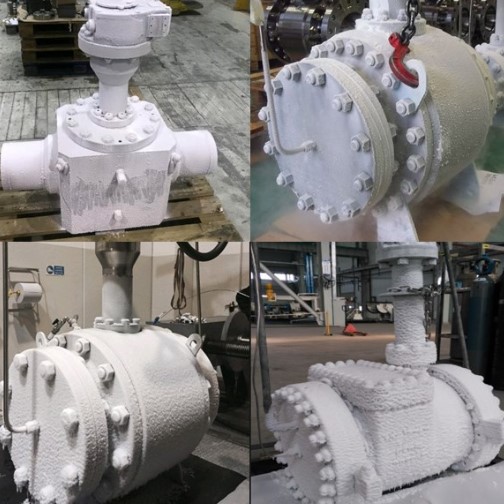
One of the primary challenges faced by cryogenic valve materials is embrittlement. Metals and alloys that are ductile and tough at room temperature can become brittle and prone to fracture under extreme cold. Embrittlement can lead to cracking of valve components or, in severe cases, catastrophic failure of the valve. For example, standard carbon steel is highly susceptible to brittle fracture at cryogenic temperatures, rendering it unsuitable for applications involving LNG, LOX, or LH2. Materials used in cryogenic valves must therefore retain sufficient ductility and impact toughness at extremely low temperatures.
Different materials contract at different rates when exposed to low temperatures. If valve components are constructed from dissimilar materials, uneven thermal contraction can generate excessive stress at joints or seals. Such stress may impair sealing performance, cause deformation, or even lead to structural failure. Maintaining dimensional stability under extreme temperature changes is thus critical for cryogenic valve design.
Liquefied gases, particularly volatile and small-molecule media like liquid hydrogen, require materials with extremely low permeability. Even microscopic pores or defects can result in gas permeation or leakage. In closed systems, small leaks can accumulate and create serious safety hazards, including flammability or oxygen enrichment in the surrounding environment.
Many cryogenic fluids are chemically reactive. Oxygen, for instance, can accelerate material degradation under certain conditions, and in combination with hydrocarbons, it may even lead to combustion or explosion. Cryogenic valve materials must therefore resist oxidation, chemical attack, and reactions with the stored media. High corrosion resistance ensures both safety and long-term durability.
Selecting suitable materials for cryogenic valves requires careful evaluation of mechanical, thermal, and chemical properties. The following properties are particularly critical:
- Low-Temperature Toughness: Materials must retain sufficient toughness at extreme low temperatures to prevent brittle fracture. This property is typically verified through Charpy impact tests or similar low-temperature mechanical testing. Austenitic stainless steels, nickel-based alloys, and certain copper alloys are known for maintaining high toughness even at temperatures approaching -269°C.
- Low Thermal Contraction: Cryogenic materials ideally exhibit a low coefficient of thermal expansion to minimize dimensional changes as temperature drops. Reduced thermal contraction helps maintain precise fitting between components, ensures tight sealing, and mitigates the risk of mechanical failure due to thermal stress.
- Excellent Corrosion Resistance: Materials must resist chemical corrosion and oxidation, and in some cases, reactions with specific cryogenic fluids. For example, liquid oxygen applications require materials that are non-flammable and chemically inert, while LNG systems may demand resistance to hydrocarbon-induced corrosion. Marine environments necessitate resistance to seawater corrosion.
- Weldability: Most cryogenic valves require welded joints. Materials must retain mechanical integrity after welding, and weld areas should not become weak points. High weldability ensures the overall structural reliability of the valve.
- Special Functional Properties: Certain cryogenic environments impose additional requirements. Valves used in oxygen-rich atmospheres, for instance, must be non-magnetic and spark-resistant to prevent ignition from friction or impact. Other environments may require materials to resist hydrogen embrittlement or maintain dimensional stability under cyclic thermal stress.
Cryogenic valve materials must meet stringent requirements, including low-temperature toughness, low thermal contraction, corrosion resistance, weldability, and specific functional properties. Engineers select materials based on the operating conditions, media properties, and safety requirements. The most commonly used materials include:
Stainless steel is the most widely used material for cryogenic valves due to its combination of strength, toughness, and corrosion resistance at low temperatures.
- 304 Stainless Steel: Offers good overall performance and is suitable for general low-temperature applications.
- 316 Stainless Steel: Contains molybdenum for enhanced corrosion resistance, making it ideal for liquid oxygen, LNG, and other cryogenic fluids.
- 321 Stainless Steel: Titanium-stabilized, providing superior resistance to intergranular corrosion.
Austenitic stainless steels retain ductility and strength at temperatures as low as -269°C and have a relatively low thermal expansion coefficient, minimizing stress-related failures caused by thermal contraction.
Nickel alloys, such as Inconel® and Monel®, are crucial for cryogenic applications requiring high strength and corrosion resistance.
- Inconel® 625: Exhibits exceptional resistance to oxidation and pitting, suitable for handling highly corrosive cryogenic fluids.
- Monel® 400: Extremely resistant to seawater corrosion, making it ideal for offshore LNG facilities.
Nickel-based alloys are more expensive and typically reserved for critical components or environments with severe corrosion risks.
Copper and aluminum alloys are occasionally used in cryogenic valves, especially in applications where thermal conductivity is important.
- Aluminum 5083: Corrosion-resistant with a high strength-to-weight ratio, suitable for weight-sensitive applications in aerospace or transport.
- Beryllium Copper: Provides spark resistance, essential for oxygen-handling valves.
However, copper and aluminum alloys may exhibit higher thermal contraction, which can limit their application in certain cryogenic scenarios.
Brass and bronze are often employed for small, low-pressure cryogenic valves.
- Silicon Bronze: Offers good corrosion resistance and moderate strength at low temperatures.
- Aluminum Bronze: Easily cast and machined, with satisfactory low-temperature performance.
These materials are cost-effective for small-scale or batch production valves.
Titanium and its alloys are increasingly used in cryogenic valves due to high strength, excellent corrosion resistance, and low thermal expansion. They are particularly suitable for weight-sensitive applications, such as aerospace liquid hydrogen systems.
Sealing materials are critical for ensuring leak-free operation of cryogenic valves. Common options include:
- PTFE (Polytetrafluoroethylene): PTFE offers excellent flexibility, chemical stability, and low friction. It performs reliably at low temperatures, reducing operating torque and wear. PTFE is suitable for a variety of cryogenic fluids, though care must be taken with highly permeable gases like hydrogen.
- Graphite: Graphite seals are used in applications requiring extreme temperature tolerance and low permeability. Specially treated graphite can prevent leakage over a wide temperature range, from cryogenic to high heat, while maintaining mechanical stability.
- Special Elastomers: Elastomers like Viton® and Kalrez® may lose flexibility at very low temperatures, but optimized formulations can provide reliable sealing. Selection depends on media type, pressure, and service life requirements.
Correct sealing material selection ensures long-term reliability and prevents leakage, which is critical for safety in cryogenic systems.
Cryogenic ball valves are specifically designed to operate safely and reliably in extreme low temperatures. Their design integrates material selection, structural engineering, and operational considerations.
Cryogenic valves often operate at temperatures where many metals become brittle. Stainless steels such as 304L and 316L maintain ductility and strength while resisting stress corrosion cracking. All components in contact with the fluid must be compatible with the specific medium. In liquid oxygen systems, only non-flammable, oxygen-inert materials are acceptable.
- Minimizing Heat Transfer: Cryogenic valves are designed to reduce heat conduction, preventing frost or ice formation on the valve body. Insulating materials and advanced sealing techniques are commonly used.
- Double Block and Bleed (DBB) Design: A DBB configuration isolates upstream and downstream fluids, improving safety. It allows leak detection and provides a pressure relief path in case of valve failure.
- Stem Sealing Systems: Options include packing, O-rings, and bellows seals. Bellows seals are widely used in cryogenic applications due to their airtightness and minimal leakage risk.
Cryogenic ball valves undergo rigorous testing, including:
Low-temperature performance evaluation (leakage rate, operating torque, flow coefficient)
Hydrostatic testing for strength and sealing
Gas-tightness testing to detect micro-leakage
Fire resistance testing to verify valve integrity under fire conditions
Standards such as API 6D, ISO 14313, and ASME B16.34 define design, manufacturing, and testing requirements for cryogenic ball valves.
Cryogenic valves are often installed in remote or difficult-to-access locations. Ease of installation, operation, and maintenance is crucial.
Operating Torque: Low temperatures increase operating torque; actuators must be selected to ensure smooth, reliable operation.
Routine Maintenance: Regular inspection, lubrication, and cleaning prevent frost, debris, or wear from affecting valve performance. Worn or damaged parts should be replaced promptly to avoid failure.
Cryogenic valves, particularly cryogenic ball valves, are indispensable in the handling of liquefied gases. Every stage—from material selection to structural design, testing, and maintenance—directly impacts system safety and reliability. By selecting materials with high low-temperature toughness, minimal thermal contraction, and excellent corrosion resistance, combined with intelligent structural design and strict quality control, cryogenic valves can maintain high performance and long-term reliability under extreme conditions.
As clean energy sources such as LNG and liquid hydrogen become more widely adopted, cryogenic valve technology will continue to advance, providing safer, more stable, and efficient fluid control solutions for energy, chemical, food, and aerospace industries.
