Complete Guide to Double-Ended Studs
Double-ended studs are a type of mechanical fastener widely used in industrial applications to securely connect two or more components. Unlike traditional bolts, which consist of a threaded shaft with a head on one end, double-ended studs are entirely threaded rods without a head. This unique design allows for greater versatility in installation and removal, especially in situations where the use of standard bolts may be impractical. The studs serve as reliable connectors in machinery, construction, energy, automotive, and other heavy-duty industries.
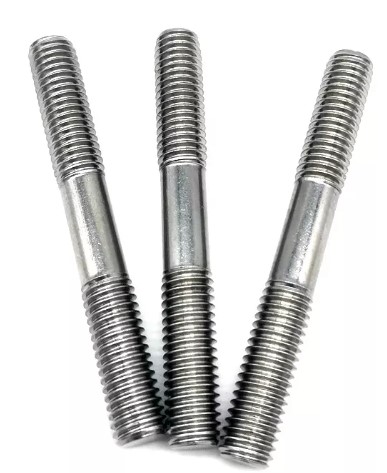
Double-ended studs are available in various types, each suited for specific applications. The most common type is the standard or equal-length stud, featuring external threads on both ends with a smooth, unthreaded portion in the middle. This smooth section, often referred to as the shank, provides structural flexibility, reduces stress concentration, and allows for alignment adjustments during installation. Another type is the fully threaded stud, which has threads along its entire length, eliminating the smooth section. Both types share the same defining characteristics: a lack of a bolt head and the use of threads at each end to secure nuts or other fasteners.
The design of double-ended studs includes specific structural features that contribute to their performance and reliability. Standard studs have threads of equal length on each end, with a smooth central section. This arrangement provides flexibility during assembly, allowing engineers to use the studs in a variety of configurations, including same-direction threads or opposite-direction threads, depending on the mechanical requirements.
Stud diameters typically range from 0.25 inches to 4 inches, while lengths can be customized to suit different applications. This dimensional versatility ensures that studs can accommodate diverse industrial needs, from connecting small machinery components to securing massive structural elements.
Double-ended studs are typically manufactured from high-strength materials to withstand substantial mechanical loads while maintaining the integrity of the joint. Common materials include carbon steel, stainless steel, and alloy steel, each offering a different balance of strength, corrosion resistance, and cost. Material choice is critical, as it directly impacts the stud’s durability, performance under load, and ability to withstand environmental challenges such as moisture, chemicals, and temperature fluctuations.
- Ease of Replacement and Maintenance: One of the primary advantages of double-ended studs is the ease with which they can be replaced. In large machinery or structures, threaded holes may wear or become damaged over time due to repeated use or environmental stress. Repairing these holes can be challenging if standard bolts are used. In contrast, double-ended studs allow for simple replacement: the damaged stud can be unscrewed, and a new one installed without complex repair work on the threaded hole. This feature reduces downtime and maintenance costs, making studs ideal for high-use or critical applications.
- Suitable for Thick or Confined Connections: When connecting thick components or working in constrained spaces, ordinary bolts may be insufficient. Double-ended studs can be manufactured to the required length, enabling them to pass through thick plates or structural elements and provide secure fastening. This adaptability makes them especially valuable in construction projects involving thick steel plates, concrete trusses, or roof beams, where traditional fasteners may fail to provide adequate engagement.
- Strong, Reliable, and Reusable Connections: Double-ended studs, when used with nuts and washers, provide exceptionally secure connections that can be easily disassembled and reassembled. This feature is vital for machinery or structures requiring frequent maintenance, inspection, or adjustment. Industries such as mining, energy production, and heavy construction benefit from this reusability, which ensures both reliability and operational efficiency.
- Resistance to Harsh Environments: Many double-ended studs are made from stainless steel or other corrosion-resistant alloys. This makes them highly suitable for use in environments with fluctuating temperatures, high pressure, or exposure to chemicals and moisture. Their corrosion resistance ensures long-term reliability even under harsh operating conditions, reducing the likelihood of premature failure and the associated maintenance costs.
Selecting the appropriate material is crucial to ensure the performance and longevity of double-ended studs. Different materials provide varying degrees of strength, durability, and resistance to environmental factors. The choice of material should consider the intended application, mechanical load, temperature range, and potential exposure to corrosive agents.
Steel is the most widely used material for double-ended studs, offering an excellent balance of strength, cost, and availability.
- Carbon Steel: Carbon steel studs are strong, durable, and cost-effective. They are suitable for general industrial applications where corrosion resistance is not a primary concern.
- Stainless Steel: Stainless steel studs provide superior corrosion resistance, making them ideal for humid, wet, or chemically aggressive environments. Common grades include 304 and 316 stainless steel, which differ in their resistance to chloride-induced corrosion.
- Alloy Steel: Alloy steels are engineered for high-strength and toughness, suitable for high-load applications such as heavy machinery, pressure vessels, and critical structural connections. They offer improved fatigue resistance compared to standard carbon steel.
Bronze studs excel in environments with strong corrosive agents, such as marine or chemical applications. Although they are more expensive than steel, their superior corrosion resistance makes them invaluable in specialized applications where failure due to corrosion is not acceptable.
Brass is softer than bronze or steel but still provides good corrosion resistance. It is suitable for applications where mechanical load is moderate, and corrosion protection is more important than ultimate strength.
Even high-quality materials benefit from surface treatments to enhance corrosion resistance. Common treatments include:
- Black Oxide: Forms a thin, protective black layer on the stud surface. It provides moderate corrosion resistance and is a cost-effective solution for many applications.
- Galvanization: Includes both standard and hot-dip galvanization. Galvanization creates a barrier against moisture and oxygen, preventing rust formation. Hot-dip galvanization produces a thicker layer for superior protection, especially in outdoor or harsh environments.
- Chrome Plating: Provides both corrosion protection and an aesthetically appealing surface, suitable for applications where appearance is important.
The choice of surface treatment should consider environmental exposure, expected service life, and cost constraints.
Understanding the specification system is essential for selecting the right stud for an application. A typical marking for an equal-length stud with M12 threads, a nominal length of 80 mm, and a strength grade of 4.8 would be M12×80 4.8.
When procuring studs, the following parameters should be clearly specified:
- Total stud length
- Thread length on each end
- Smooth shank length (if applicable)
- Thread profile and pitch
- Material type
- Strength grade
- Surface treatment
Working with a knowledgeable supplier ensures that these specifications are correctly interpreted and that customized solutions can be implemented when necessary.
Double-ended studs are used extensively across industries requiring strong, reliable connections.
- Energy Sector: In wind turbines and power generation equipment, double-ended studs connect large structural components such as tower sections and nacelle bases. These applications demand studs with high tensile strength and fatigue resistance to withstand wind loads, vibration, and environmental stress.
- Automotive Manufacturing: Studs are used in critical engine components, transmissions, and chassis assemblies, where precision and reliability are paramount. Automotive studs must meet stringent standards for strength, dimensional accuracy, and durability.
- Construction and Infrastructure: In large-span steel structures, bridges, and high-rise buildings, double-ended studs connect primary load-bearing elements such as beams and columns. They provide the necessary strength, load distribution, and seismic performance for safety-critical applications.
- Railways: Studs are widely employed in railway tracks, signaling equipment, and bridge supports. These applications demand durability under heavy loads, long-term vibration, and exposure to outdoor environments.
- Heavy Machinery and Mining Equipment: Studs secure frames, gearboxes, and critical structural components in mining and construction machinery, which operate under extreme loads, vibration, and dust.
- Boilers and Pressure Vessels: In high-temperature, high-pressure environments such as boilers and pressure vessels, studs connect flanges and end caps. These applications require studs with excellent heat resistance, sealing capabilities, and mechanical strength.
Proper installation is essential for ensuring performance and safety. Standard installation steps include:
- Prepare the threaded hole: Ensure that it is clean, undamaged, and matches the stud thread specification.
- Screw in the stud: Insert one end into the threaded hole to the specified depth to ensure adequate engagement and joint strength.
- Install components: Slide the components to be fastened over the other end of the stud.
- Add washers: Distribute pressure evenly and protect component surfaces.
- Tighten nuts: Follow the torque specifications carefully. Over-tightening can damage threads, while under-tightening may compromise joint integrity.
- Inspect: Verify the connection for tightness and stability.
Double-ended studs are often subjected to heavy loads, vibration, and environmental stress. Without regular maintenance, friction loss, thread loosening, and eventual failure may occur. Proper maintenance practices include:
- Routine Inspections: Check for deformation, wear, cracks, or damage on threads and shanks. Verify that the thread pitch remains consistent and that nuts are securely fastened.
- Timely Replacement: Replace any damaged or worn studs before complete failure to avoid equipment breakdowns or safety hazards.
- Operational Monitoring: Listen for abnormal noises or signs of instability, which may indicate loosened studs.
- Maintenance Records: Keep detailed logs of inspections, replacements, and observed conditions to track performance and predict replacement cycles.
Despite their simple appearance, double-ended studs play a critical role in modern industry. From renewable energy structures to automotive assembly lines, from heavy construction projects to mining machinery, studs provide secure, reliable, and reusable connections.
Understanding their structural characteristics, choosing appropriate materials, specifying correct dimensions, and performing proper installation and maintenance are essential for optimal performance. Engineers, procurement specialists, and maintenance personnel can all benefit from a deep understanding of double-ended studs, ensuring efficient operations, equipment safety, and long-term reliability.
When selecting double-ended studs, always consider environmental conditions, load requirements, expected service life, and consult professional suppliers when necessary to make informed decisions. By following these guidelines, double-ended studs can provide robust, reliable performance across a wide range of demanding applications.
