Complete Guide to Selecting Chemical Valves
Valves are core components in pipeline systems across industries such as petrochemicals, pharmaceuticals, and energy, controlling the flow and delivery of fluids. With the wide variety of valve types and complex operating conditions, selecting the most suitable valve has become an essential skill for engineers and procurement professionals. This guide provides a systematic overview of chemical valve selection from a practical perspective, covering fundamental principles, step-by-step procedures, and material selection considerations to help make informed and rational decisions.
Choosing a chemical valve goes beyond simply matching specifications; it requires a comprehensive approach that considers medium properties, operating conditions, and safety requirements. Based on industry practice, the following principles should guide valve selection:
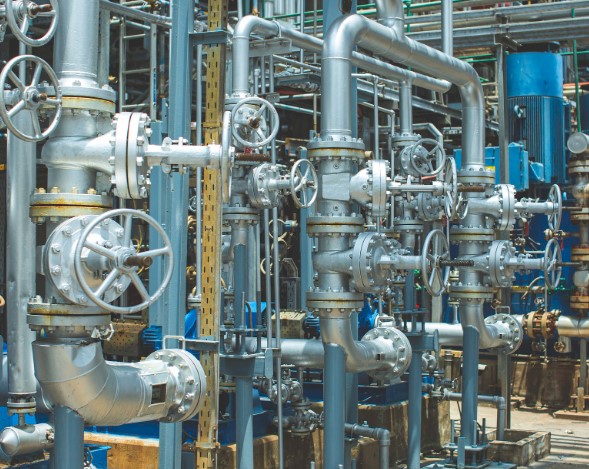
Straight-through valves have low flow resistance and are suitable for on/off applications. Downward-closing valves, such as globe and piston valves, feature more tortuous flow paths and higher resistance, making them suitable only where higher pressure drops are acceptable. Applications requiring flow regulation should select valves with good throttling characteristics. Globe valves are especially suitable, as their seat size is proportional to the plug travel. Rotary valves, such as plug, butterfly, and ball valves, can also be used for throttling but are typically limited to certain diameters.
For media containing suspended particles, choose valves whose closure elements slide along the sealing surface, providing a wiping action. Ball, plug, and butterfly valves achieve this and are ideal for particulate-laden fluids. Valves with vertical plug motion may trap particles, so unless the sealing materials can tolerate embedded particles, they are best for relatively clean media.
For flow diversion or redirection, plug and ball valves are preferred, as they can be designed with three or more ports. In some cases, multiple conventional valves can be combined to achieve similar functionality.
Before beginning the selection process, it is essential to systematically collect the following key data:
For gases, identify whether it is a pure gas or a mixture, whether droplets or solids are present, and whether condensation-prone components exist. These factors directly influence valve design and material choice.
For liquids, consider whether the fluid is single-component or a mixture, contains volatile components or dissolved gases, or may form a two-phase flow upon pressure drop. Also evaluate suspended solids, viscosity, freezing or pour point, and other physical parameters.
Other critical properties include corrosiveness, toxicity, solubility in valve materials, and flammability or explosiveness. These factors affect material selection and may impose structural requirements or necessitate higher pipeline ratings.
Nominal operating temperature and pressure are basic parameters, but extreme conditions during start-up, shutdown, or regeneration must also be considered. For example, a valve at a pump outlet must account for maximum pump shut-off pressure; if system regeneration occurs at higher temperatures and lower pressures, the combined effect must be evaluated.
Valve actuation frequency affects wear requirements. For frequently operated systems, double-valve arrangements may extend service life. Permissible system pressure drops are also critical: minimal drop or no throttling may favor low-resistance valves such as gate or straight-through ball valves, whereas throttling requires valves with good regulation and some inherent pressure drop.
The installation environment significantly impacts selection. Outdoor valves in cold regions, particularly those handling chemicals, should be cast steel or stainless steel, as cast iron may become brittle at low temperatures.
Chemical processes impose varied functional requirements: some valves only need to shut off flow, others must precisely regulate flow, and some must redirect media. Clearly defining functional needs helps narrow the selection and improve efficiency. Valves can be categorized into four functional types:
Almost all valves provide shut-off functionality. For simple on/off control, gate and ball valves are ideal. Quick shut-off applications favor plug, ball, or butterfly valves. Globe valves can serve both shut-off and flow regulation purposes, making them versatile.
Gate valves suit fully open or closed applications, offering low resistance and broad diameter and pressure ranges, but are prone to vibration when partially open and unsuitable for flow regulation. Special designs are required for particulate-laden fluids.
Ball valves provide excellent sealing and rapid operation, suitable for medium- to low-pressure pipelines; high-precision manufacturing now allows their use in high-pressure pipelines, though high temperatures remain challenging due to sealing material limits.
Globe valves offer reliable sealing and precise flow regulation, though directional changes induce pressure drops, and solid deposition can occur, making them less suitable for slurries. Y-type and angle globe valves reduce pressure drops while allowing flow diversion.
Butterfly valves have low resistance, fast actuation, light weight, and compact structure, making them suitable for large flow regulation. Sealing material constraints typically limit use to temperatures below 300°C and pressures under 1.0 MPa, though material advances are expanding applicability.
Throttle and needle valves are suitable for precise, low-flow regulation, commonly used in instrumentation and sampling systems.
Plug valves are among the earliest valve types, providing bidirectional sealing, easy operation, long service life, and minimal residue accumulation, making them ideal for hazardous material systems. Multi-port designs simplify piping and reduce the number of valves and fittings.
Ball valves, especially three-way or four-way types, are also effective for flow diversion in complex piping systems.
Check valves prevent backflow, with common designs including swing, lift, and ball types, selected based on orientation and diameter. Foot valves suit pump inlets, while open-topped tanks may include strainers.
Diaphragm and pinch valves isolate fluid from mechanical parts, ideal for corrosive, viscous, or particulate-laden fluids, though usage is limited by diaphragm or hose material.
Material selection is central to valve performance, impacting lifespan and safety. Studies show that approximately 60% of chemical equipment failures are corrosion-related, making material choice critical.
Generally follows cast iron → carbon steel → stainless steel. Cast iron is cost-effective for general conditions, carbon steel offers high strength and versatility, and stainless steel provides superior corrosion resistance.
Common sequence: rubber → copper → alloy steel → PTFE (F4). Rubber offers excellent sealing but limited temperature tolerance; copper alloys are wear-resistant; alloy steel withstands high temperatures and pressures; PTFE offers outstanding chemical resistance.
- Sulfuric acid: Concentrations above 80% at <80°C are compatible with carbon steel or cast iron, but not for high-velocity flows. Ordinary stainless steel (304/316) has limited applicability. High-silicon cast iron, high-alloy stainless steel, or PTFE-lined valves are preferred.
- Hydrochloric acid: Most metals corrode rapidly. Molybdenum-containing high-silicon iron can handle ≤50°C and ≤30% concentration; non-metals like rubber, polypropylene, and fluoroplastics are ideal.
- Nitric acid: Stainless steel is widely used; 316/316L may not offer better resistance than ordinary stainless. High-temperature applications require titanium or titanium alloys.
- Acetic acid: Corrosive to ordinary steel at any concentration and temperature; stainless steel is suitable, with 316 for high-temperature or dilute acetic acid vapor. Highly concentrated or mixed corrosive media require high-alloy stainless or fluoropolymer valves.
- Hastelloy C276: Excellent in strong oxidizing acids (concentrated H₂SO₄, wet chlorine), temperature up to 400°C.
- Monel 400: Suited for hydrofluoric acid and seawater, temperature up to 480°C.
- Duplex stainless steel 2205: Cost-effective for weak acids and salt solutions, temperature up to 300°C.
- Titanium and titanium alloys: Superior in highly corrosive media, particularly high-temperature nitric acid and seawater.
Valve ends are typically threaded, flanged, or welded, with threaded and flanged connections being most common.
Threaded connections suit DN50 and smaller valves, offering ease of installation but limited pressure capacity. Larger diameters increase installation and sealing difficulty.
Flanged connections allow easy installation and removal across various sizes and pressures, though valves are heavier and costlier.
Welded connections are more reliable under harsh conditions but are difficult to remove, making them suitable for long-term or high-temperature applications.
Valves can be operated manually, via chain wheels or extension rods, or remotely with motors. Explosion-proof motors are required in hazardous zones.
Remote operation can be pneumatic, hydraulic, or electric, with electric options including solenoid or motor-driven actuation. Frequent operations favor pneumatic or electric actuators to reduce manual labor.
- Clarify process requirements and collect data on medium, operating conditions, and environment.
- Determine functional needs: shut-off, regulation, diversion, or check.
- Select valve type based on function and medium characteristics.
- Choose materials for body, internals, and sealing surfaces according to corrosion and operating conditions.
- Select connection method based on installation, maintenance, and reliability.
- Determine actuation method based on operation frequency and automation needs.
- Calculate flow coefficient (Cv) to verify valve sizing.
- Consult product catalogs or datasheets to select specific models.
- Verify compliance with industry standards and safety requirements.
Chemical valve selection requires integrating technical knowledge and practical experience. Correct choices ensure safe and stable operations, reduce maintenance costs, and extend equipment life. Engineers should understand valve structures and performance, master process flows and operating conditions, and adhere strictly to chemical standards to select the most suitable valves. With advances in materials and manufacturing, new valve products continue to emerge. Engineers are advised to stay updated on industry developments, maintain communication with professional manufacturers, and obtain the latest technical support and application guidance to ensure successful valve selection.
