Complete Guide to Flange Insulation Gasket Kits
Flange insulation gasket kits are sealing material systems designed for pipe and vessel connections. Installed between two flanges, they serve two primary purposes: filling the interface gap to prevent media leakage and external contamination, and providing electrical isolation to prevent galvanic corrosion.
In industrial operations, pipeline systems are widely used to transport oil, gas, water, and various chemical media. These pipelines are typically made of metal, and when flanges made from dissimilar metals come into direct contact in the presence of electrolytes such as water or corrosive fluids, galvanic corrosion cells may form, accelerating the corrosion of the more active metal. Flange insulation gasket kits prevent this electrochemical corrosion circuit by inserting insulating materials between flanges, thereby protecting the pipeline system. These kits are commonly manufactured from materials such as rubber, polytetrafluoroethylene (PTFE), phenolic resin, glass-reinforced epoxy (GRE/G10/G11), and metal composite structures. These materials are engineered to withstand high temperature, high pressure, and chemically aggressive environments, ensuring long-term and stable pipeline operation.
Based on flange structural configurations, flange insulation gasket kits are generally classified into three primary types: Type E, Type F, and Type D, each designed for specific installation and operating conditions.
Type E insulation gaskets are full-face gaskets with an outer diameter matching the flange diameter and bolt hole openings aligned with the flange bolt pattern. This design simplifies installation alignment and ensures accurate positioning on the flange sealing surface.
Type E gaskets are suitable for flat face (FF) flanges and provide complete coverage of the flange sealing surface, offering comprehensive surface protection. They are particularly suitable for applications requiring full electrical isolation.
Material selection for Type E gaskets is highly flexible, ranging from economical phenolic resin bonded with rubber layers to high-performance insulation materials suitable for liquefied petroleum gas (LPG) and high-pressure gas (HPG) applications. Users can select appropriate materials based on operating pressure, temperature, and medium characteristics.
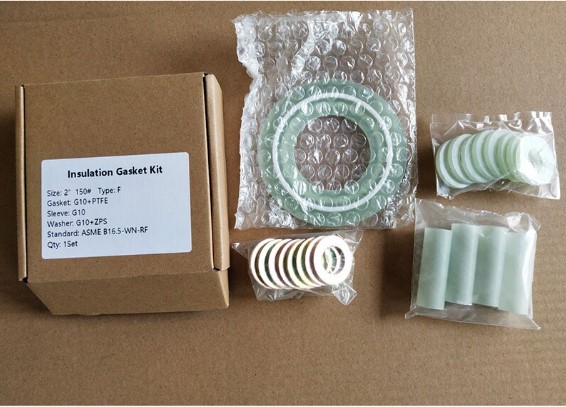
Type F insulation gaskets are specifically designed for raised face (RF) flanges. The outer diameter of the gasket is smaller than the bolt circle diameter, allowing installation within the bolt circle while maintaining reliable pressure sealing and electrical isolation.
Materials used for Type F gaskets are similar to those of Type E gaskets, including phenolic resin, G10 fiberglass epoxy, and PTFE. This type is one of the most widely used insulation gasket configurations in process pipeline and industrial systems.
Type D insulation gaskets are designed for ring-type joint (RTJ) flanges, which are commonly used in high-pressure and high-temperature environments such as oil and gas extraction and transportation systems.
Type D gaskets are typically manufactured from phenolic or glass-reinforced epoxy (GRE) materials and are designed in compliance with ANSI and API standards. They are usually supplied in oval or octagonal shapes to match the RTJ groove profile.
For ultra-high-pressure applications with pressures up to 15,000 PSI, API-standard BX-type gaskets are also available. These gaskets feature a pressure-energized self-sealing design that maintains reliable sealing and insulation performance under extreme pressure conditions.
Flange insulation gasket kits are critical components for preventing corrosion and leakage in pipeline systems. A complete FIK assembly typically includes the following components:
- Insulation gasket: Available in center-type or oval-type designs depending on flange configuration (E, F, or D type).
- Insulating sleeves: One sleeve is provided for each bolt to isolate the bolt from the flange hole wall.
- Insulating washers: Two washers are installed between the nut and flange surfaces.
- Steel washers: Two galvanized steel washers are used to distribute load pressure.
All components are generally manufactured from high-quality materials with excellent chemical stability and low water absorption characteristics. Premium kits are usually marked with specifications including flange size, type, pressure rating, and material grade to ensure correct installation.
The main functions of FIK include:
Electrical isolation function: Flange insulation kits form an effective isolation barrier between flanges, breaking the galvanic corrosion circuit and preventing stray current conduction and galvanic cell formation. This is particularly important for cathodic protection systems.
Sealing function: The kit prevents media leakage at flange joints, reducing environmental pollution and safety risks. The gasket material must be compatible with the process medium and maintain elasticity under operating temperature and pressure conditions.
Thermal isolation function: In certain applications, FIKs also act as thermal barriers between pipelines and equipment, reducing heat loss and improving energy efficiency.
Flange insulation gasket kits are widely used across various industrial sectors, primarily including the following industries:
This is the largest application market for flange insulation gasket kits. During petroleum extraction, transportation, and refining processes, pipeline systems often traverse different geological environments and face severe corrosion risks. Insulation kits effectively control stray currents, enhance cathodic protection efficiency, and limit or eliminate electrochemical corrosion.
In long-distance transmission pipelines, insulation flanges are used to separate different cathodic protection zones, ensuring protection current is concentrated in the pipeline sections requiring protection and preventing current loss.
Chemical plants and refineries contain numerous corrosive media, including acids, alkalis, salt solutions, and organic solvents. Flange insulation gasket kits must not only prevent galvanic corrosion but also resist chemical attack. High-performance materials such as PTFE and G11 are widely adopted in such environments.
In water treatment plants and municipal pipeline networks, galvanic corrosion is likely to occur at joints between different metals such as steel, cast iron, and copper. Insulation gasket kits effectively isolate dissimilar metals and extend pipeline service life.
Marine pipeline systems and offshore platforms are exposed to both seawater corrosion and stray electrical currents. Insulation gasket kits, when combined with cathodic protection systems, provide reliable corrosion protection for offshore installations.
In power plants and substations, grounding systems may generate stray currents that accelerate corrosion of buried pipelines. Insulation flanges are used to isolate these effects and protect fuel transmission and cooling water pipelines.
Selecting appropriate materials is critical to the performance of flange insulation gasket kits. Common materials and their characteristics include:
- Phenolic Resin: Phenolic resin offers relatively low cost, good mechanical strength, and reliable electrical insulation performance. It is suitable for general industrial environments with continuous operating temperatures typically below 120°C. It also provides good resistance to oil and fuel but may degrade in strong acid or alkaline conditions.
- G10 Glass-Epoxy Material: G10 is a composite material made of glass fiber and epoxy resin, offering excellent electrical performance and chemical stability. It has low water absorption and high mechanical strength, making it a standard choice for oil, gas, and offshore engineering applications. Its operating temperature range is approximately 130–150°C.
- G11 High-Temperature Epoxy Material: As an upgraded version of G10, G11 offers better thermal resistance, with operating temperatures reaching 180–200°C. It is commonly used in refineries and petrochemical plants under high-temperature conditions.
- PTFE (Polytetrafluoroethylene): PTFE offers extremely strong chemical corrosion resistance and is nearly immune to most chemical media. It has a low friction coefficient and excellent non-stick properties but relatively low mechanical strength and noticeable cold flow characteristics, often requiring reinforced or modified structures.
- Metal-Reinforced Insulation Kits: Metal reinforcement structures embedded within insulating materials provide the highest structural strength and sealing reliability. These kits are particularly suitable for high-pressure flange and RTJ systems capable of withstanding extremely high bolt preload and internal pressure.
- Other Materials: Special applications may also use polyethylene, nylon, ceramic materials, or cryogenic-grade materials for extreme environments such as liquefied natural gas systems operating at −196°C or ultra-high-temperature conditions.
Several factors must be considered when selecting flange insulation gasket kits.
Insulation gaskets must be compatible with relevant flange standards, including:
ASME/ANSI B16.5 – Pipe flanges and flanged fittings
API 6A – Wellhead and Christmas tree equipment
API 6D – Pipeline valves
Flange configurations include RTJ (ring-type joint), RF (raised face), and FF (flat face). High-pressure or RTJ systems require higher-strength insulating materials.
The following factors must be considered:
Maximum continuous operating temperature
Chemical medium characteristics (acids, alkalis, solvents, hydrocarbons)
Special environments such as seawater, hydrogen sulfide, and carbon dioxide exposure
Low-temperature service conditions such as liquefied natural gas pipelines (−162°C)
Steam systems
This is a core performance indicator. High-quality products should exhibit:
High dielectric strength (typically >500 V/mil)
Low moisture absorption (<0.1%)
Long-term stable insulation resistance
Compatibility with cathodic protection systems
Important certifications include:
NACE SP0286 – Design, installation, and maintenance of insulating flange joints
API 5LD – Corrosion-resistant alloy clad pipe
ISO 9001 quality management system certification
In critical industrial sectors, traceability of materials and supplier credibility are essential. Products should be sourced from manufacturers with proven field performance, comprehensive testing reports, and strong technical support capabilities.
Flange insulation gasket kits are essential components in modern industrial pipeline systems. By providing reliable sealing performance and electrical isolation, they effectively prevent galvanic corrosion, media leakage, and heat loss, ensuring safe, efficient, and long-term stable pipeline operation. From Type E, F, and D configurations to materials ranging from phenolic resin to high-performance composites, a wide variety of insulation gasket solutions are available to meet the specific needs of different industries and operating conditions. Proper selection, standardized installation, and regular maintenance are key to achieving optimal performance. For engineers and procurement personnel in the oil and gas, chemical, and water treatment industries, understanding the technical characteristics and application considerations of flange insulation gasket kits, choosing certified high-quality products, and establishing partnerships with reliable suppliers are critical steps in ensuring pipeline system integrity and minimizing life-cycle costs.
