Classification and Selection Guide for Check Valves
In both industrial and civil fluid systems, check valves play an indispensable role. Like loyal guards, they ensure one-way flow of fluids and prevent various problems caused by backflow. However, with the wide variety of check valves available on the market, how can one select the right type and install it correctly? This article provides a detailed explanation of check valve classifications, selection criteria, and installation methods to help you make informed decisions when choosing check valves.
Check valves can be classified in various ways, mainly according to their structural design, materials, and application scenarios. Understanding these classifications helps ensure accurate selection based on actual operating requirements.
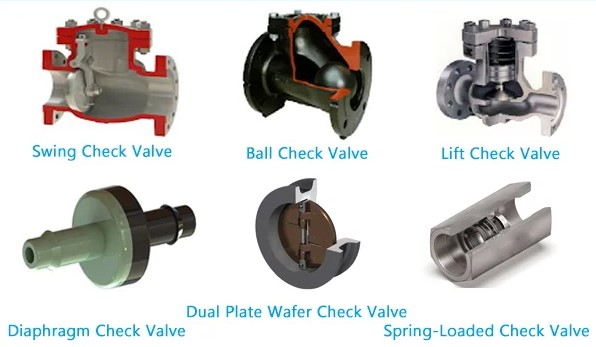
Swing check valves open and close by rotating the disc around a pivot axis through the valve seat passage. The disc is typically circular, and the internal flow path is streamlined, resulting in relatively low flow resistance. These characteristics make swing check valves particularly suitable for large-diameter pipelines with low flow velocities and infrequent flow fluctuations, such as liquid transfer lines in chemical processing and large water supply and drainage systems.
However, they are not suitable for pulsating flow conditions, and their sealing performance is slightly inferior to that of lift check valves.
- Single-disc swing check valves: Simple in structure, suitable for small- and medium-diameter pipelines and low-flow systems, such as building water supply and drainage pipelines. They effectively reduce water hammer and are an economical choice.
- Dual-disc and multi-disc swing check valves: Designed to handle larger flow rates and greater pressure variations, commonly used in high-flow industrial pipelines. In chemical processing, these valves ensure stable liquid transport under high pressure and large flow conditions, reducing safety risks caused by backflow.
In lift check valves, the disc moves vertically along the centerline of the valve body, and the structure is similar to that of a globe valve. As a result, the flow resistance coefficient is relatively high. However, lift check valves offer excellent sealing performance and are suitable for applications with high sealing requirements.
- Vertical lift check valves: Installed in vertical pipelines, especially where the medium flows upward, such as hot water supply and thermal systems. They effectively prevent hot water backflow and ensure stable operation of heating systems.
- Horizontal lift check valves: Suitable for horizontal pipelines and commonly used at branch connections of long-distance oil and natural gas transmission pipelines. They help maintain normal flow in main pipelines and prevent backflow from branch lines from affecting system safety.
Butterfly check valves operate by rotating the disc around a pin shaft inside the valve seat. They feature a simple structure, compact size, light weight, and flexible installation options, allowing installation in horizontal, vertical, or inclined pipelines. Although their sealing performance is relatively limited, their installation flexibility makes them suitable for applications where sealing requirements are not particularly strict.
In-line check valves are a relatively new type of valve in which the disc moves along the centerline of the valve body. They are compact, lightweight, and easy to manufacture, representing one of the future development directions of check valves. However, their flow resistance coefficient is slightly higher than that of swing check valves and they are suitable for applications where flow resistance requirements are not overly stringent.
Stop check valves are mainly used in boiler feedwater and steam shutoff applications. They combine the functions of lift check valves and globe or angle valves. These valves are suitable for applications with high shutoff performance requirements, such as boiler feedwater and steam pipelines, ensuring reliable isolation of the medium and safe operation of boiler systems.
Check valves are available in a wide range of materials, each suitable for different working environments and media characteristics.
Cast iron check valves are cost-effective and typically used in building water supply and drainage systems with low corrosion requirements. Although their corrosion resistance is relatively limited, it is sufficient for general water media. They are an economical option for small-scale construction projects.
Cast steel check valves can withstand higher pressures and temperatures and offer good mechanical properties. They are suitable for applications with demanding pressure and temperature requirements, such as oil and natural gas transmission pipelines. These valves provide excellent strength and durability for long-term stable operation.
Stainless steel check valves are widely used due to their outstanding corrosion resistance. They can withstand high pressures and temperatures while resisting corrosion from various chemical media. In industries such as chemical processing, food production, and pharmaceuticals, stainless steel check valves are an ideal choice, ensuring medium purity and long-term system stability.
Selecting the appropriate check valve requires comprehensive consideration of factors such as fluid properties, pipeline size, and system pressure and temperature requirements.
- Clean Media: Check valves are generally suitable for clean media. If the medium contains solid particles or has high viscosity, the disc may jam or fail to seal properly. In such cases, special designs such as diaphragm check valves should be considered. These valves use diaphragm elasticity to prevent backflow while minimizing wear from solid particles.
- Incompressible Fluids: For incompressible fluids such as water, the required closing speed must be evaluated. Excessively fast closure may cause water hammer, damaging the pipeline system. Slow-closing check valves can gradually reduce flow velocity during closure, effectively minimizing water hammer effects.
- Compressible Fluids: For compressible fluids such as gases, selection principles are similar. If the flow range is wide, check valves with damping or deceleration devices may be used. In applications with frequent start-stop cycles, such as compressor outlets, lift check valves are recommended due to their quick response to flow changes.
- Small-Diameter Pipelines: For pipelines with nominal diameters below 50 mm, installation position and medium characteristics must be considered. Butterfly check valves are suitable for low-pressure small-diameter pipelines due to their compact size and ease of installation. For medium- and high-pressure applications, vertical or straight-through lift check valves provide better sealing and pressure resistance.
- Large-Diameter Pipelines: For pipelines with nominal diameters above 50 mm, flow rate and pressure fluctuations are key considerations. Swing check valves are ideal for DN 50–600 high-pressure pipelines, offering low flow resistance and high capacity. For DN 200–1200 medium- and low-pressure pipelines, wear-free spherical check valves are more suitable due to good sealing performance and low resistance.
- Installation Position: Installation position significantly affects valve selection. Vertical lift check valves can only be installed in vertical pipelines, while horizontal lift check valves are suitable for horizontal pipelines. Butterfly and swing check valves offer greater installation flexibility and can be installed in horizontal, vertical, or inclined pipelines.
- Pressure Requirements: Check valves cover a wide pressure range, from low to high pressure. Swing check valves can be designed for very high pressures, with PN ratings up to 42 MPa, making them suitable for high-pressure systems. Butterfly and diaphragm check valves are more suitable for low-pressure applications. Selection should always be based on the system’s maximum working pressure.
- Temperature Requirements: Valve material and design determine the applicable temperature range. Cast iron check valves are suitable for ambient temperatures, while stainless steel check valves can operate over a wide temperature range, from –196°C to 800°C. For extreme temperature conditions, valves with appropriate temperature resistance must be selected to ensure reliability and stability.
After selecting the appropriate check valve, correct installation is equally important to ensure optimal performance, extended service life, and safe system operation.
- Pre-installation Preparation: Before installation, inspect the pipeline to ensure it is clean and free of debris and welding slag. Check the valve for damage or deformation and verify that the model and specifications meet design requirements.
- Determine Installation Direction: The installation direction must match the flow direction of the medium. For swing check valves, the disc opening direction should align with flow direction; for lift check valves, the disc movement should correspond to flow direction. Directional arrows on the valve body can be used as a guide.
- Pipeline Connection: Common connection methods include flanged, threaded, and welded connections. Ensure secure connections and good sealing. For flanged connections, install appropriate gaskets and tighten bolts evenly. For threaded connections, ensure clean threads and apply suitable sealant.
- Installation Inspection: After installation, manually operate the valve to ensure smooth opening and closing without sticking. Check all connections for leakage to confirm installation quality.
Proper maintenance is essential for long-term stable operation.
- Visual Inspection: Regularly inspect the valve for corrosion, damage, or deformation. Apply anti-corrosion treatment promptly if corrosion is detected.
- Sealing Performance Check: Monitor inlet and outlet pressure changes to assess sealing performance. Replace seals or repair the valve if leakage is detected.
- Cleaning: Clean the valve regularly to remove debris and deposits from the body and disc. Increase cleaning frequency for media containing solid particles.
- Lubrication: Lubricate moving or guided components as required to reduce friction and extend service life.
- Avoid Overpressure Operation: Do not operate check valves beyond their design pressure. Install pressure gauges to monitor system pressure and take corrective measures as needed.
- Timely Replacement of Damaged Parts: Replace damaged components such as discs, seats, and seals promptly to maintain valve performance and prevent system failures.
As critical components in fluid systems, check valves are available in various types, each with specific selection and installation requirements. This article has outlined their structural classifications, materials, and application scenarios, as well as key selection factors such as fluid properties, pipeline size, installation position, system pressure, and temperature. Proper installation and regular maintenance are equally essential to ensure long-term reliable operation. By selecting the right check valve for specific requirements and following correct installation and maintenance practices, the full performance of check valves can be realized, ensuring safe and stable operation of fluid systems. We hope this guide provides valuable reference for your selection and use of check valves. Should you have further questions or require technical support, please feel free to contact us.
