Understand Plastic Pipes: Materials, Features & Applications
In modern construction and industrial sectors, piping systems play a vital role. From water supply and drainage to chemical fluid transportation, selecting the right pipe material is essential to ensure system safety, efficiency, and long-term reliability. As a high-performance, cost-effective, and environmentally friendly solution, plastic pipes have gradually become the preferred choice for many engineering projects. This article provides an in-depth overview of the characteristics, types, and applications of plastic pipes, helping you better understand this star material in modern piping systems.
Plastic pipes are products manufactured by melt processing resins combined with various additives. These additives include plasticizers, stabilizers, fillers, lubricants, colorants, UV absorbers, and modifiers, all of which impart specific properties and performance characteristics to the pipes.
The composition of plastic pipe raw materials gives them excellent chemical stability, making them resistant to environmental factors and the media conveyed inside the pipeline, with strong corrosion resistance. In addition, plastic pipes have low thermal conductivity, providing good insulation performance and significant energy-saving benefits. Their smooth inner walls result in low friction coefficients, reduced scaling, minimal change in effective flow area over time, and a low risk of blockage.
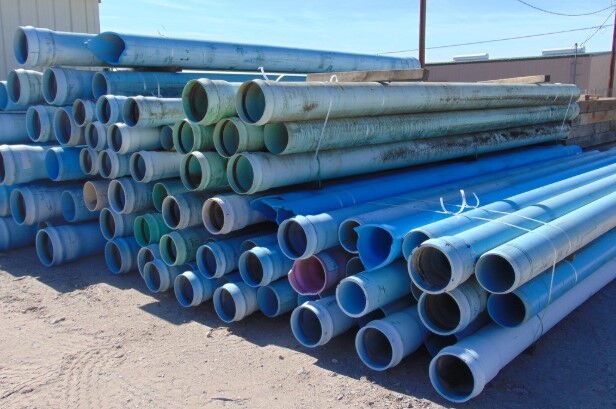
Among the wide variety of plastic pipes available, several types stand out due to their unique properties and advantages, playing important roles in different application scenarios. These pipes not only meet diverse engineering requirements but also have become essential components of modern piping systems thanks to their excellent performance and cost-effectiveness. The following sections introduce the most common plastic pipes and their characteristics.
PVC-U pipes are among the most widely used plastic piping systems for cold water and drainage. They are economical, durable, and can have a service life of up to 70 years without rusting or corroding. At the end of their service life, PVC pipes can be recycled, making them environmentally friendly. In addition, PVC pipes are free of bisphenol A (BPA), eliminating concerns about BPA contamination in household water supply systems. PVC pipe sections can be connected using various fittings, adhesives, and cements, offering excellent versatility and ease of use.
However, PVC pipes and fittings may become brittle over time when exposed to sunlight or installed in high-temperature environments. Due to limited heat resistance, PVC is not suitable for hot water applications. Despite this, PVC pipes are resistant to most acids, alkalis, and salts, making them suitable for chemical processing and wastewater treatment. Their low density and light weight facilitate transportation and installation, reducing construction costs. PVC pipes also offer good electrical insulation and are commonly used as conduits for wires and cables. Compared with metal pipes, PVC pipes are cost-effective, and well-designed systems can withstand relatively high water pressure, making them suitable for water supply and drainage systems.
CPVC pipes are PVC pipes with a special chlorination treatment that significantly enhances heat resistance, making them suitable for hot water and industrial applications. CPVC pipes and fittings can be used for potable water systems, including hot water lines, without becoming brittle after long-term exposure to high temperatures. Their operating temperature range typically allows them to handle hot water or chemical fluids at 90–110°C, making them more suitable for hot water transport than standard PVC.
CPVC pipes have higher strength and pressure resistance and can withstand corrosion from acids, alkalis, salts, and most chemical solvents. They are widely used in chemical industries and industrial fluid transport, as well as in water supply and fire protection systems, where they resist degradation from chlorine and chemicals in water. CPVC pipes can be joined using solvent cement or heat fusion, offering simple, reliable installation and low maintenance costs. However, CPVC production is more complex and its cost is typically 30–50% higher than PVC, though still lower than metal pipes. CPVC pipes are usually light yellow or off-white and offer fewer color options, which may limit aesthetics in some applications. Prolonged exposure to sunlight can cause aging, so UV-resistant coatings or insulation are recommended.
PP-R pipes and fittings offer high temperature and pressure resistance, making them suitable for demanding pressure piping applications such as hot and cold water systems in commercial high-rise buildings. PP-R pipes can withstand continuous temperatures up to 95°C and short-term exposure up to 110°C, making them ideal for hot water and heating systems. They are more heat-resistant than PVC, though less so than high-performance plastics such as PVDF and PFA.
PP-R material is resistant to most acids, alkalis, salts, and common chemical solvents. It does not scale or rust and does not affect water quality during long-term use, making it ideal for potable water transport. PP-R pipes are free of plasticizers, non-toxic, odorless, and compliant with food-grade hygiene standards. At normal temperatures, they can withstand working pressures of 1.25–2.5 MPa and are suitable for high-pressure water supply systems. Compared with PVC and CPVC, PP-R pipes offer better impact resistance and crack resistance, maintaining stable performance even at low temperatures.
PP-R pipes are joined by heat fusion welding, forming a homogeneous, leak-free joint with long service life. Compared with solvent cement bonding used for PVC, this method is safer and more reliable, unaffected by solvent aging. PP-R pipes have a thermal conductivity of only 0.24 W/(m·K), about 200 times lower than metal pipes, providing excellent insulation and reducing heat loss. Under normal conditions, their service life exceeds 50 years. However, PP-R pipes become brittle below −5°C and are not suitable for extremely cold environments. They are also sensitive to UV radiation and require protective layers or concealed installation. Heat fusion requires specialized equipment and skilled installers, resulting in slightly higher labor costs. Although PP-R is more expensive than PVC, it is cheaper than CPVC and PVDF and offers excellent overall value.
Polybutylene pipes are high-performance plastic pipes with excellent heat and pressure resistance, suitable for hot water and heating systems. Their smooth inner walls reduce scaling and fluid resistance, improving flow efficiency. PB pipes are flexible, easy to install, and resistant to impact and chemical corrosion, making them suitable for various residential and industrial applications. However, they are relatively expensive and require strict installation standards. In low-temperature environments, their performance may decline, so proper insulation is required in cold regions.
ABS pipes are engineering plastic pipes with good impact resistance and chemical corrosion resistance. They are commonly used in drainage systems and certain industrial applications where resistance to flow impact and chemical exposure is required. ABS pipes have smooth inner walls and are easy to install. However, they have limited heat resistance and are not suitable for hot water systems. Their performance may degrade at high temperatures, so environmental conditions must be considered.
PE-X pipes are high-performance plastic pipes produced through cross-linking processes. They offer excellent heat and pressure resistance, making them suitable for hot water and heating systems. Their smooth inner walls reduce scaling and fluid resistance, while their flexibility facilitates installation. PE-X pipes also provide good impact resistance and chemical stability. However, their manufacturing process is relatively complex and costly. In cold environments, performance may be affected, so insulation is recommended.
HDPE pipes are widely used in water supply and drainage systems. They offer good corrosion resistance and impact resistance, allowing them to withstand high flow rates and chemical exposure. Their smooth inner walls reduce blockage, and their flexibility simplifies transportation and installation. However, HDPE pipes have limited heat resistance and are not suitable for hot water systems. Their performance may decline in high-temperature environments, requiring appropriate design considerations.
Thanks to their excellent performance, cost-effectiveness, and environmental benefits, plastic pipes are widely used across many industries, including building services, chemical processing, food and pharmaceutical production, heating systems, and electrical protection.
- Building Water Supply and Drainage: PVC-U pipes are commonly used for drainage due to their low cost and durability. PP-R pipes are widely used for potable water and hot water systems, while HDPE pipes are often applied in both water supply and drainage systems due to their corrosion and impact resistance.
- Chemical Fluid Transport: PPH and CPVC pipes are widely used in chemical industries, acid and alkali transport, and wastewater treatment due to their excellent chemical and thermal resistance.
- Food and Pharmaceutical Industries: PP-R and PPH pipes, being non-toxic and compliant with food-grade and medical standards, are widely used in food processing, pure water systems, and pharmaceutical production.
- Heating and Hot Water Systems: PP-R and PE-X pipes are widely used in hot water and heating systems due to their high temperature resistance, insulation performance, and long service life.
- Cable and Wire Protection: PVC pipes are commonly used as conduits for wires and cables due to their excellent electrical insulation, light weight, and ease of installation.
Proper installation and regular maintenance are essential to ensure long-term reliable operation.
- Select appropriate pipe materials and fittings according to application requirements.
- Ensure construction quality by using skilled installers and correct techniques.
- Consider environmental factors such as temperature and sunlight exposure.
- Apply protective measures such as UV-resistant coatings, insulation, or supports when necessary.
- Conduct regular inspections for cracks, leaks, or deformation.
- Clean pipelines periodically to prevent scaling or blockage.
- Avoid external impacts, especially in low-temperature environments.
- Monitor environmental changes and apply insulation or protective measures as needed.
Plastic pipes offer significant environmental benefits. They are recyclable at the end of their service life, reducing resource waste and environmental pollution. Their manufacturing process consumes less energy than metal pipes, and their light weight reduces transportation energy consumption. Long service life and low maintenance requirements further minimize resource use and environmental impact.
As a high-performance, economical, and environmentally friendly piping material, plastic pipes have become an ideal choice for modern piping systems. With excellent chemical stability, corrosion resistance, insulation performance, and hydraulic efficiency, they are suitable for a wide range of applications. Proper selection and installation can significantly improve system safety and reliability while reducing maintenance costs. With their clear environmental advantages, plastic pipes are set to play an even greater role in the future of piping systems.
