How to Choose Ball Valves: One, Two & Three-Piece Design
In industrial production, construction engineering, and even everyday utility systems, fluid control in piping networks relies heavily on a critical component—the ball valve. Despite its simple appearance, the ball valve is widely regarded as one of the most reliable and efficient shut-off devices due to its compact structure, ease of operation, and excellent sealing performance. As a result, it has become the preferred solution in industries such as oil and gas, chemical processing, water treatment, HVAC systems, and power generation.
However, when it comes to actual procurement or system design, engineers and buyers often encounter confusion surrounding the terms “one-piece,” “two-piece,” and “three-piece” ball valves. What exactly distinguishes these three structures? What are their respective advantages and limitations? And most importantly, how do you choose the right one for your application?
This comprehensive guide provides a detailed breakdown of these three types of ball valves from multiple perspectives, including structural design, performance characteristics, application scenarios, and lifecycle cost considerations—helping you make a truly informed engineering decision.
Among the three main structural types, the one-piece ball valve is the most traditional and simplest design. It represents the most basic form of ball valve technology and is widely used where cost efficiency and basic shut-off functionality are the primary requirements.
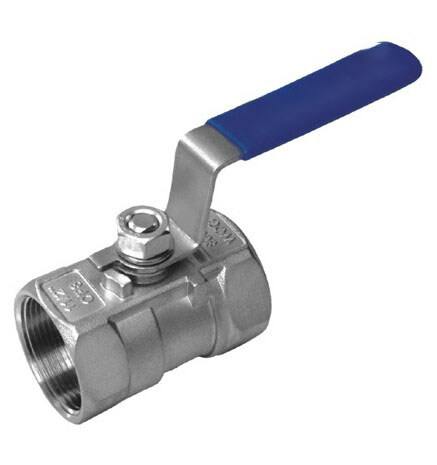
A one-piece ball valve is named for its integrated valve body, which is formed from a single casting or forging. There are no body joints or assembly seams in the main housing, which makes it structurally compact and mechanically robust.
All internal components—including the ball, seat, and stem—are inserted from one side of the valve body during assembly.
This design offers two key advantages:
- High structural strength: Since the valve body is a single piece of metal, it eliminates weak points at joints and can withstand relatively high internal pressure.
- Excellent sealing integrity: Fewer potential leakage paths make it suitable for systems requiring safe handling of liquids, gases, or hazardous fluids.
Despite its strength, the biggest limitation of the one-piece ball valve lies in its flow passage design. Because the internal components must be inserted through one side of the valve body, the internal bore is typically reduced in size.
This results in a reduced bore (or reduced port) design, which leads to:
- Increased flow resistance
- Lower flow capacity compared to pipeline diameter
- Potential blockage when handling viscous fluids or media containing particulates
Therefore, in systems where flow efficiency is critical or where solid-laden fluids are present, one-piece ball valves may not be ideal.
One-piece ball valves support several connection types, including:
Threaded connections: Typically using tapered pipe threads that tighten as they are screwed in, providing good sealing for small-diameter pipelines.
Flanged connections: Used in medium to large pipelines, allowing easy installation and maintenance.
Clamp or compact connections: Designed for space-constrained installations where compactness is essential.
Common materials include:
- WCB carbon steel: Suitable for general industrial applications
- 304 stainless steel (CF8): Offers good corrosion resistance, widely used in food, pharmaceutical, and water systems
- 316 stainless steel (CF8M): Enhanced resistance to acids and chlorides, ideal for chemical environments
Typical size range is usually 1/4 inch to 2 inches, as larger sizes significantly increase manufacturing complexity and cost.
One-piece ball valves are best suited for:
- Low-pressure systems such as domestic water supply and compressed air
- Compact equipment installations with limited space
- Non-critical systems where valve replacement is acceptable instead of repair
An important special application is in high-temperature drainage and steam-related systems, especially flanged one-piece designs. Because the valve body is monolithic, it eliminates leakage risks at body joints, making it suitable for steam, thermal oil, and other high-temperature media.
With insulation jackets, these valves can also handle crystallizing or solidifying media such as sulfur or asphalt by maintaining temperature stability.
The two-piece ball valve represents a significant evolution from the one-piece design, offering improved maintainability while maintaining relatively compact construction and cost efficiency.
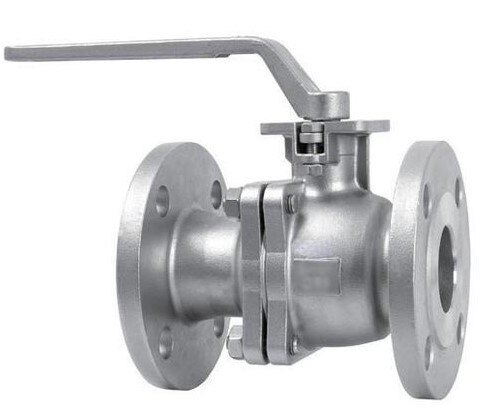
A two-piece ball valve consists of:
- A main body section, which houses the ball, stem, and seats
- A secondary body section (end cap or bonnet), connected via threads or bolts
This split-body design introduces a major improvement: serviceability.
One of the key benefits of the two-piece design is that internal components can be accessed by removing only the secondary body section.
This means:
- The valve does not need to be removed from the pipeline
- Maintenance time is significantly reduced
- System downtime is minimized
This makes two-piece ball valves particularly attractive in industrial systems where moderate maintenance access is required.
Unlike one-piece valves, two-piece ball valves typically adopt a full bore (full port) design, where the internal flow passage matches the pipeline diameter.
Advantages include:
- Minimal flow resistance
- High flow capacity
- Reduced risk of clogging
- Compatibility with pipeline pigging operations
This makes them suitable for systems transporting viscous fluids or media with minor particulate content.
Two-piece ball valves support:
- Threaded connections (internal and external)
- Flanged connections for higher pressure or larger diameters
They are available across a wide pressure range, from low-pressure residential systems to high-pressure industrial pipelines, offering significantly greater versatility than one-piece designs.
Most two-piece ball valves are made from stainless steel, primarily:
- 304 stainless steel
- 316 stainless steel
- These materials provide:
- Excellent corrosion resistance
- High mechanical strength
Suitability for harsh environments such as marine and chemical applications
Precision-machined sealing surfaces and high-quality gaskets ensure reliable sealing performance at the body joint.
Advantages:
- Easy maintenance without pipeline removal
- Full bore design ensures high flow capacity
- Wide range of applications from low to high pressure
- Reliable sealing performance
Limitations:
- Higher cost than one-piece valves
- Slightly more complex structure
- Additional body joint introduces a theoretical leakage point (though rare in practice)
When systems require continuous operation, frequent maintenance, or harsh operating conditions, the three-piece ball valve becomes the preferred solution. It is the most advanced and modular design among the three types.
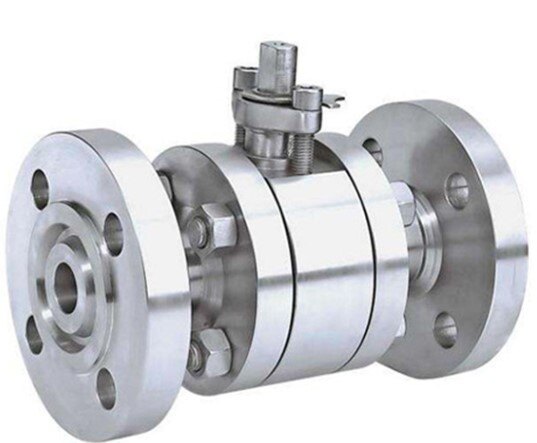
A three-piece ball valve consists of:
- A central body section containing the ball and stem
- Two end caps (side bodies) connected by bolts
This modular structure allows the central section to be removed independently while the pipeline remains intact.
The most significant advantage of the three-piece design is online maintenance.
In practice, this means:
- The valve can be serviced without shutting down the entire pipeline system
- Only the central section is removed for repair or replacement
- End connections remain fixed to the pipeline
For industries such as chemical processing, oil refining, and food production, this capability translates into major economic benefits by reducing downtime.
Three-piece ball valves often support:
- Threaded connections
- Flanged connections
- Welded and socket-weld connections
Welded connections provide excellent strength and sealing integrity but introduce thermal risks during installation. To solve this, extended pipe ends (extension tubes) are used.
These extensions protect internal components from welding heat during installation, ensuring that sensitive sealing elements remain undamaged.
Like two-piece valves, three-piece designs generally feature full bore construction. However, due to stronger structural integrity, they are better suited for:
- High-pressure steam systems
- High-temperature oil pipelines
- Industrial gas transport systems
Three-piece ball valves are widely used in:
- Chemical processing plants
- Oil and gas refineries
- Power generation systems
- Food and pharmaceutical industries
They are especially valuable in systems requiring frequent cleaning, sterilization, or part replacement.
Although these three valve types may look similar externally and operate in the same way, their engineering philosophy and performance characteristics differ significantly.
One-piece: Simplest structure, minimal components
Two-piece: Moderate complexity, body split into two sections
Three-piece: Most complex, modular design with multiple bolt connections
Cost increases with complexity, but lifecycle cost must also be considered.
One-piece: Usually reduced bore, limited flow
Two-piece: Full bore, high flow efficiency
Three-piece: Full bore, optimized for large-scale industrial flow systems
One-piece: Not repairable; requires full replacement
Two-piece: Partial disassembly possible
Three-piece: Full online maintenance capability
One-piece: Lowest risk due to no body joints
Two-piece & Three-piece: Slightly higher theoretical risk due to body joints, though modern sealing technology makes leakage extremely rare
One-piece: Best for low to moderate pressure
Two-piece: Wide pressure range suitability
Three-piece: Highest tolerance for high-pressure and high-temperature environments
One-piece, two-piece, and three-piece ball valves each serve distinct engineering purposes. There is no absolute “best” option—only the most suitable one for a specific application.
- One-piece valves prioritize simplicity and cost efficiency
- Two-piece valves balance performance and practicality
- Three-piece valves maximize maintainability and system uptime
For engineers and procurement specialists, selecting the right valve requires evaluating not just purchase price, but also long-term operational cost, maintenance downtime, and system reliability.
A well-informed selection ensures safer operation, improved efficiency, and reduced lifecycle cost.
If uncertainty remains, consulting a professional valve manufacturer with detailed operating conditions is always recommended for optimal technical guidance.
