How to Choose Between Plug Valves and Ball Valves
In the industrial sector, valves are indispensable components of fluid control systems. They act like traffic controllers within pipelines, precisely regulating the direction, flow rate, and pressure of fluids. Among the wide variety of valve types, plug valves and ball valves have garnered significant attention due to their unique characteristics and broad applications. This article delves into the features, working principles, advantages, and practical differences between these two valve types, providing readers with a comprehensive understanding of their critical roles in industrial fluid control.
Plug valves, with their distinctive rotary mechanism and adaptability to complex media, have carved a unique niche in fluid control. They can flexibly regulate the flow of fluids while maintaining stable performance under a wide range of challenging conditions.
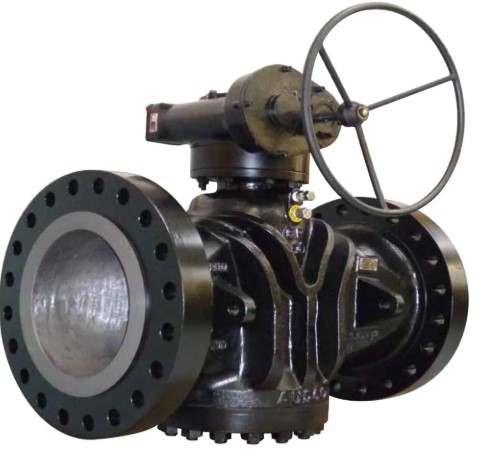
A plug valve is a rotary valve featuring a core component known as the plug, which may take the form of a cylindrical or conical closure. By rotating the plug 90 degrees, the channels in the plug align with or separate from the channels in the valve body, allowing the valve to open or close. Cylindrical plugs generally have rectangular channels, whereas conical plugs feature trapezoidal channels. This design renders plug valves relatively lightweight, though some pressure loss occurs when fluid passes through the valve.
The working principle of a plug valve is straightforward. When the plug is rotated to align with the valve body channels, fluid flows smoothly through the valve. Rotating the plug 90 degrees causes the channels to become perpendicular, completely blocking the fluid flow. This simple yet effective mechanism allows for rapid opening and closing, enabling quick fluid control.
Plug valves offer several notable advantages. Firstly, they exhibit excellent sealing performance. The wiping action between the plug and the valve body surfaces effectively removes debris and reduces wear, extending the life of the sealing surfaces. Moreover, in a fully open state, the plug is completely isolated from the medium, making plug valves particularly suitable for fluids containing suspended particles, such as wastewater or slurries, as they minimize erosion and wear inside the valve.
Additionally, plug valves easily accommodate multi-port designs. A single plug valve can be engineered with two, three, or even four separate flow paths. This multi-channel capability simplifies pipeline design, reduces the number of required valves, and minimizes additional fittings. For example, in complex chemical processes, a multi-port plug valve can simultaneously control multiple fluid streams, enabling functions such as diverting and merging flows, optimizing the overall process, and reducing system complexity and costs.
However, plug valves also have limitations. Their structure results in relatively high operating torque, making them less flexible, particularly for large-diameter valves. Conventional top-entry plug designs struggle with size expansion due to the weight of the plug. Inverted plug designs can mitigate size constraints but may compromise sealing due to gravitational effects, often requiring grease injection. While grease-lubricated sealing works for specific media like natural gas or petroleum, it is unsuitable for applications demanding high purity, such as food or pharmaceuticals, where contamination from grease must be avoided.
Plug valves are irreplaceable in certain applications. In oil extraction and natural gas transportation, plug valves frequently handle produced fluids containing solid particles. Their reliable sealing and adaptability ensure safe and stable fluid transport while minimizing valve failures caused by debris. In the food processing industry, plug valves manage the flow of particulate-containing products such as syrups and jams. Hygienic sealing ensures product safety and quality.
In industrial fluid control, ball valves play an indispensable role thanks to their excellent performance and wide-ranging applications. If plug valves are considered flexible rotating guardians, ball valves are the high-efficiency, reliable shutoff specialists. Their compact structure, superior sealing performance, and easy operation make them an ideal solution for efficient and dependable fluid control across various industrial scenarios.
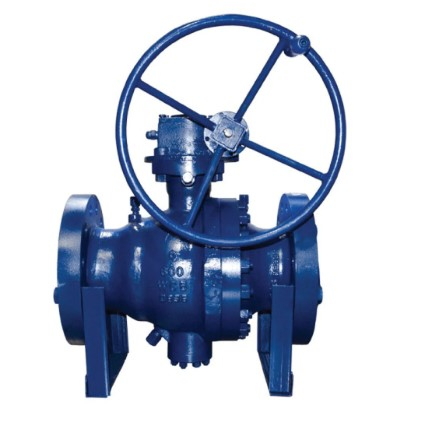
Ball valves are widely used industrial valves featuring a spherical core with a circular passage, equal in diameter to the pipeline. Flow is regulated by rotating the ball 90 degrees via a valve stem. When the passage aligns with the pipeline, the valve is open and allows smooth fluid flow; when perpendicular, the valve is closed, completely stopping flow.
The ball valve's compact structure, consisting of the valve body, stem, ball, and sealing rings, facilitates easy installation and reduces the system's spatial footprint. Sealing rings, made of high-quality elastic materials, provide excellent resilience and tight sealing. In a closed state, the ball seats securely, preventing leakage. These rings are replaceable, extending the valve's service life.
Ball valves excel in sealing performance and low fluid resistance. The tight ball-to-seat contact, combined with high-quality sealing materials, ensures near-zero leakage, making ball valves ideal for systems transporting toxic, hazardous, or flammable media in chemical and pharmaceutical industries.
Full-bore ball valves cause minimal flow resistance, enabling high fluid velocity, reducing pumping energy, and enhancing overall system efficiency. They perform particularly well in high-flow, high-pressure applications, such as long-distance natural gas pipelines or main material lines in large chemical plants.
Ease of operation is another hallmark. A simple 90-degree rotation opens or closes the valve quickly, and the valve's status is visually apparent. Indicators further enhance operational safety and reliability. Corrosion-resistant materials allow ball valves to handle acidic, alkaline, or saline media, expanding their use in chemical, metallurgical, and other industrial applications.
Ball valves are easy to maintain. Regular checks of the sealing rings and lubrication systems suffice, and worn parts can be quickly replaced. Installation and removal are straightforward, supporting routine maintenance.
Ball valves find applications beyond natural gas, chemicals, and pharmaceuticals, including water treatment, food and beverage, and power generation. In water treatment, they control clean or wastewater flow. In food and beverage industries, they handle liquid ingredients with hygienic sealing, ensuring product safety. In power plants, they regulate steam or cooling water, ensuring reliable equipment operation.
- Sealing Performance: Both valve types provide good sealing but differ in mechanism and suitable media. Plug valves' wiping action removes debris and reduces wear, excelling with particulate-laden fluids. However, high torque and limited flexibility in large diameters may affect sealing in some cases. Ball valves offer more reliable sealing, with the ball tightly fitting the seat and near-zero leakage, maintaining performance across diverse media and operating conditions, especially in high-flow and high-pressure scenarios.
- Fluid Resistance: Ball valves have lower fluid resistance. Full-bore designs minimize flow loss, maintain high fluid velocity, and reduce energy consumption, making them ideal for large flow or high-pressure systems. Plug valves create some pressure drop due to their structure, particularly with viscous or high-volume media. Optimized flow paths mitigate this somewhat, but resistance remains higher than ball valves.
- Operation and Maintenance: Ball valves are simpler to operate, 90-degree rotation opens or closes the valve, with clear status indication. Plug valves require precise plug alignment, and operation is less intuitive, especially for large diameters due to high torque. Maintenance is easier for ball valves due to their simple design, whereas plug valves require more careful handling, particularly with sealing surfaces.
- Application Scope: Plug valves are suited for high-sealing applications and particulate-laden media, with multi-port advantages simplifying complex piping. However, size limitations restrict their use in large-diameter systems. Ball valves are more versatile, supporting large diameters, multiple media types, and various operating conditions. They are suitable for gases, liquids, and steam, with different designs tailored to temperature and fluid requirements.
Choosing the right valve is crucial for safe, reliable, and efficient fluid control. Key factors include:
- Medium Characteristics: For particulate or impurity-laden fluids, plug valves are advantageous. For high-purity requirements, ball valves are preferable.
- Flow and Pressure Requirements: Ball valves handle high flow and pressure efficiently, reducing energy consumption. Plug valves may face resistance limitations in such conditions.
- Valve Diameter: Large-diameter systems favor ball valves, which offer compact, easy installation and high capacity. Plug valves are generally smaller and limited in large-scale applications.
- Operational and Maintenance Convenience: Frequent operation and precise control favor ball valves due to their simple, quick operation and easier maintenance.
- Budget Considerations: Ball valves are generally cost-effective, with lower manufacturing and maintenance costs, while plug valves' complexity may result in higher initial costs.
Plug valves and ball valves are key components in industrial fluid control, each with distinct advantages. Plug valves excel in sealing, handling particulate media, and multi-port designs, making them ideal for specific applications. Ball valves offer low fluid resistance, broad applicability, reliable operation, and simple maintenance, making them widely adopted across industries. Valve selection should consider medium type, flow and pressure demands, valve size, operational convenience, and cost to ensure optimal system performance. Both plug and ball valves play indispensable roles in industrial fluid control. As technology advances, their performance and application scope will continue to expand, providing increasingly reliable solutions for modern industrial operations.
